
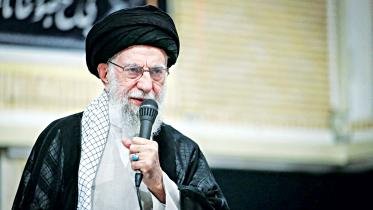


Ayatollah Ali Khamenei, the supreme leader of Iran since 1989 and a prominent adversary of Western nations, was assassinated in the initial phase of a substantial military operation conducted by the United States and Israel, which continued into a second day on Sunday with the objective of overthrowing the Islamic republic.
The demise of Khamenei was officially announced by Iranian state television early Sunday, shortly after President Donald Trump declared the elimination of the 86-year-old religious leader, labeling him as “one of the most malevolent figures in history.”
In Tehran, jubilant cheers resonated through the streets following reports from Israel confirming Khamenei’s death, accompanied by columns of dark smoke lingering over the vicinity where he typically resided, as reported by witnesses to AFP.
The assault transpired following the brutal suppression of widespread protests by Iranian authorities in recent weeks, resulting in numerous fatalities.
Amidst loud explosions reverberating across Tehran in the early hours, Trump vowed relentless attacks until the downfall of the Islamic regime, urging security forces to stand down.
Trump issued a statement asserting, “This presents a significant opportunity for the Iranian populace to reclaim their nation.”
Israeli Prime Minister Benjamin Netanyahu also addressed Iranians, encouraging them to unite, overthrow the ruling regime, and secure their future.
In retaliation, Iran launched a series of missile and drone strikes across the Middle East, claiming lives in Abu Dhabi and Tel Aviv, while explosions shook prominent cities in Gulf Arab nations.
The Israeli military confirmed the deaths of Ali Shamkhani, a key advisor to Khamenei, and General Mohammad Pakpour, the head of Iran’s influential Revolutionary Guards, in the attacks.
According to Iranian media reports, Khamenei’s daughter, son-in-law, and granddaughter were among the casualties.
Ali Larijani, the head of Iran’s Supreme National Security Council and a notable survivor, expressed defiance, emphasizing that the people of Iran would impart a lasting lesson to international oppressors.
Concerns over the succession of Khamenei arose due to his advanced age, sparking speculation on potential successors, with expectations of increased influence for the Revolutionary Guards, deeply entrenched in Iran’s economy.
Reza Pahlavi, the son of the deposed pro-Western shah during the 1979 Islamic revolution, warned against accepting any successor from within the existing system, urging Iranians to remain vigilant and mobilize when called upon.
Pahlavi heralded the reported demise of Khamenei, the second supreme leader after Ayatollah Ruhollah Khomeini, proclaiming the effective end of the Islamic Republic and envisioning its imminent relegation to history’s obscurity.
The strikes initiated by Iran resulted in significant casualties, with the Red Crescent society reporting over 200 fatalities and more than 700 injuries.
A strike targeting a school in the south claimed 108 lives, as per the Iranian judiciary, although independent verification of the incident was unattainable by AFP.
In Israel, residents sought refuge in shelters as Iranian missiles were intercepted overhead, causing casualties and injuries, while neighboring Arab capitals also witnessed the aftermath of retaliatory strikes.
The closure of the vital Strait of Hormuz was announced by Iran’s Revolutionary Guards, a strategic move impacting oil transit in the Gulf region.
The extensive military campaign, unprecedented in scale, caught Tehran residents off guard, prompting heightened security measures and widespread disruption of daily activities.
Eyewitnesses reported observing Tomahawk missiles heading towards targets before communication channels were severed, marking a significant foreign government-targeted military action since the 2003 Iraq invasion.
The military operation was characterized by Israeli army chief Lieutenant General Eyal Zamir as significantly larger than past conflicts with Iran, with the Israeli air force conducting its most extensive air raid to date.
Multiple countries in the region closed their airspaces, and airlines suspended flights following the escalation of hostilities, as diplomatic efforts failed to prevent the conflict from escalating into a push for regime change.
Efforts to engage diplomatically with Iran on its nuclear program faltered, culminating in a clear shift towards regime change rather than a negotiated nuclear agreement, as indicated by Trump post-attack.
Despite mediation efforts and calls for a ceasefire, the situation escalated, prompting urgent appeals to the UN Security Council to intervene and halt the ongoing military actions.