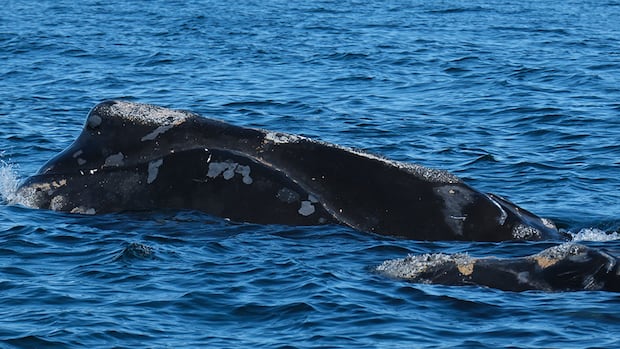
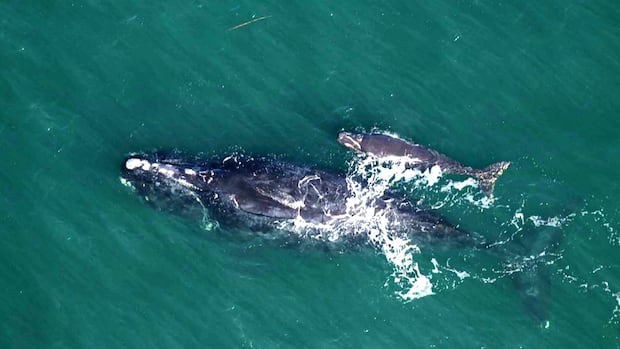
In 2026, the North Atlantic right whale population saw a significant rise in births, reaching a peak not witnessed since 2009, with 24 calves recorded, including a newborn spotted with its mother, Silt, off the Quebec coast in September. However, these newborns still face numerous ongoing threats that could prove fatal.
Current estimates indicate that the population stands at only 382, prompting the North Atlantic Right Whale Consortium to urge immediate action to ensure the species’ survival.
Heather Pettis, who heads the right whale research initiative at the Anderson Cabot Center and chairs the North Atlantic Right Whale Consortium, remarked, “The newly released estimate of the right whale population highlights the necessity for further efforts to safeguard this species.”
She added, “The population has yet to establish a clear recovery trajectory and remains highly susceptible to entanglements and vessel collisions—dangers we are capable of mitigating.”
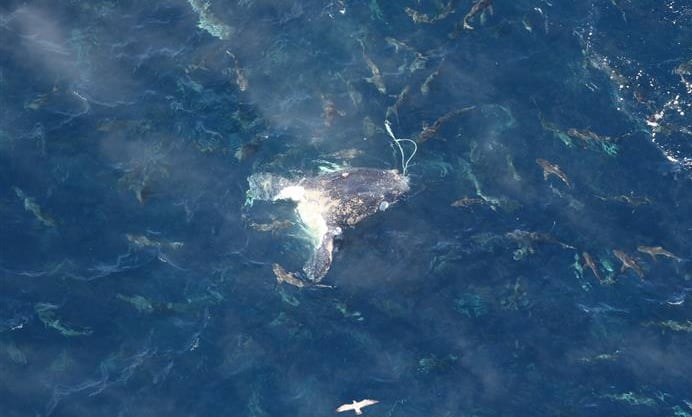
A four-year-old male named “Division” was found off North Carolina on January 27 after dying from severe entanglement due to Canadian snow crab gear. In February, researchers discovered a three-year-old female dead on a barrier island off Virginia’s eastern coast. (Submitted by Clearwater Marine Aquarium Research Institute)
In 2026, two whale deaths have been recorded. One was due to entanglement, while the cause of the other remains undetermined. In January, the carcass of a whale named Division was seen off North Carolina.
This four-year-old male had been first observed in 2025 with fishing line tangled around his head and mouth, causing cuts into his blowhole and becoming embedded in his jaw.
Shortly thereafter, the New England Aquarium reported the death of a three-year-old female right whale off Virginia. Additionally, this year has seen eight reported instances of human-inflicted injuries to right whales: seven from entanglements and one from a vessel strike.
Philip Hamilton, who has been studying North Atlantic right whales since the 1980s at the New England Aquarium in Boston, developed this interest out of a deep compassion for these marine mammals that have been perilously close to extinction for many years.
Hamilton expressed the difficulty in imagining the suffering a whale experiences when caught in fishing gear.
“Consider what it would be like to be ensnared in rope that shifts as you move… essentially slicing into your flesh,” he described. “It must be excruciating. They lack arms, and the pain is… nearly unimaginable.”
Hamilton can identify many of the remaining North Atlantic right whales by name, yet Admiral holds a particularly significant place in his heart.
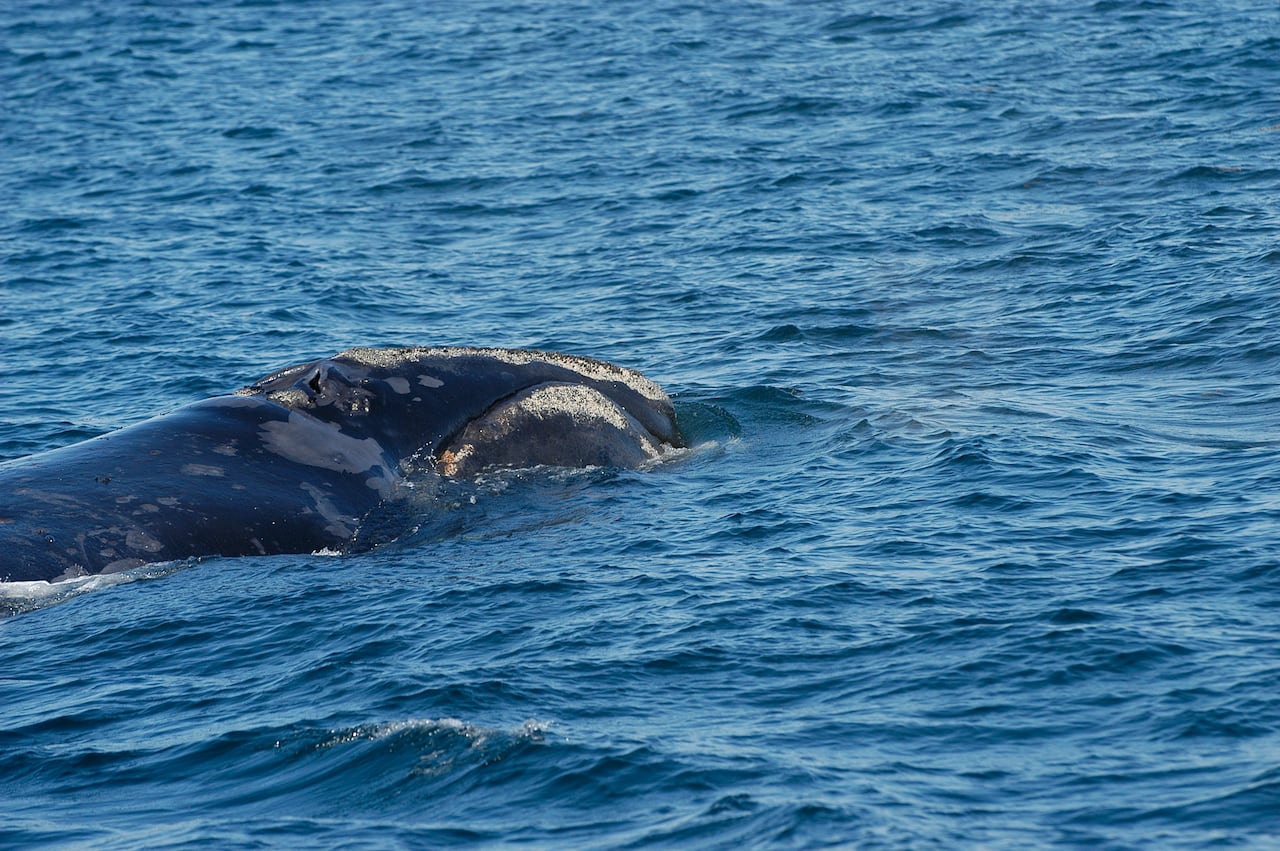
Admiral is beloved by biologists due to her playful surfacing behavior. She suffered a severe entanglement in 2007 and has not been seen since. (Submitted by New England Aquarium)
“She was an adult when first sighted in 1980 and was regarded as the grand dame of the population. Her size was such that I could recognize her even from a mile away because she would rocket up like a submarine, breaking the surface,” Hamilton reminisced.
“She was also known for doing headstands in certain areas, so you would often see her with her tail raised high.”
Regrettably, the iconic Admiral has not been seen in over ten years following a severe entanglement with fishing lines.
“The right whales are fulfilling their role. It is imperative that we do our part to protect them, as they cannot contribute more than they already are,” Hamilton emphasized.
Whale-safe gear
In February, Ottawa initiated a Whale-safe Gear Strategy. Testing of ropeless fishing gear has been ongoing in eastern Canada, including western Newfoundland.
Andrea Morden, involved in whale management with the DFO, stated that collaborating with fishers has led to advancements in reducing entanglements and in demonstrating what a future whale-safe fishery might entail.
“What we have discovered is that a universal gear solution will not work across the diverse fisheries of eastern Canada,” she remarked.
Morden noted that certain fisheries, such as those for crab and lobster, pose higher risks due to their significant reliance on rope. The DFO is partnering with the fishing industry to explore gear modifications that can promote both economic success and the recovery of the North Atlantic right whale population.
This includes not only ropeless gear but also modifications that minimize the likelihood of whale entanglement, such as using lower breaking-strength rope and remote-controlled fishing gear.
Whale aware
With a big smile, Jack Lawson, a marine mammal scientist from Newfoundland, expressed how fortunate Newfoundlanders and Labradorians are to witness the ocean, including sightings of a North Atlantic right whale earlier this summer. However, Lawson emphasized that this closeness to nature comes with a responsibility.
“We are privileged to have these animals visiting our waters every year, and I believe we also have the duty to exercise caution around them,” stated Lawson, who specializes in studying the North Atlantic right whale.
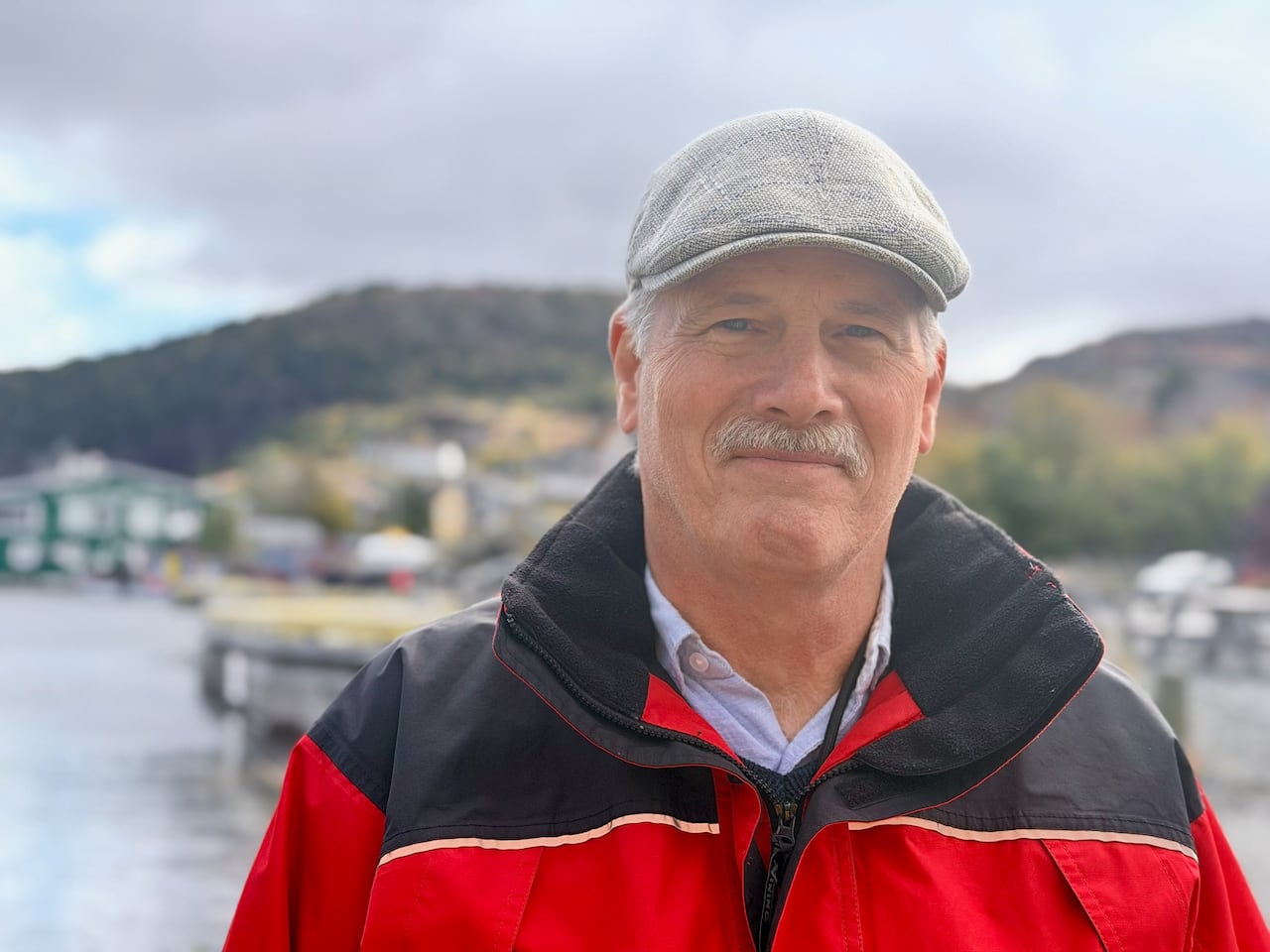
Jack Lawson is excited to see North Atlantic right whales in the waters of Newfoundland and Labrador but is concerned for their safety as they approach coastal areas. (Leila Beaudoin/CBC)
He mentioned that it’s essential to raise awareness—not just among big ships but also small boats—regarding the presence of these mammals, as a collision could be deadly.
-
A surprise baby right whale spotted near Quebec is bringing ‘a lot of hope’ for the species
-
North Atlantic right whales at greater risk of collision with boats at night: study
Predicting potential collisions involving North Atlantic right whales poses a challenge for scientists. The species’ movements are significantly influenced by seasonal migrations and calving requirements, which is why researchers advocate for enhanced collaboration between Canada and the United States.
Pettis emphasized that the recovery of the species hinges on continued protective measures in both nations.
Download our free CBC News app to sign up for push alerts for CBC Newfoundland and Labrador. Sign up for our daily headlines newsletter here. Click here to visit our landing page.