
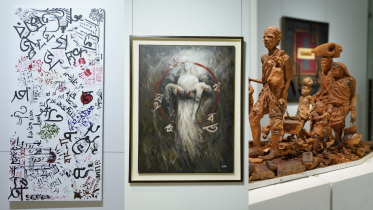


An impactful art exhibition recently concluded at Edge Gallery, situated in Bay’s Edgewater at Gulshan 2. The event, which ran from February 21 to the present day between 10 am and 8 pm, commemorated the 1952 Language Movement of Bangladesh, a significant chapter in the country’s history. The exhibition featured a compelling mix of original artwork, contemporary creations, and preserved historical artifacts, showcasing the sacrifices made during the language movement and the enduring struggle for the recognition of Bengali as a state language.
The showcased artworks hailed from both established and up-and-coming artists, utilizing diverse mediums including installations, mixed media, acrylic paints, and unique print techniques. Each piece stood as a testament to the resilience of the Bengali populace in the face of adversity. A notable highlight was the inclusion of original paintings from 1952, meticulously preserved by the Durjoy Bangladesh Foundation, offering a raw and evocative connection to the historical events.
Among the exhibited works were contributions by renowned artists like Murtaja Baseer and Quamrul Hasan. Baseer’s renowned “Bloody 21st” print, capturing the intensity of the February 21st protests, left a lasting impact on viewers. The exhibition also featured a significant artifact: the official declaration recognizing Bengali as one of Pakistan’s state languages. This document, originally housed in the Language Movement Museum, played a crucial role in the exhibition, serving as a tangible link to the activists’ endeavors and the movement’s eventual triumph, underscoring the significance of February 21st as a symbol of defiance and fortitude.
The exhibition seamlessly intertwined the historical legacy of the 1952 Language Movement with the poignant expressions of contemporary artists. An arresting installation by Ivy Zaman, titled “Composition 1,” presented a sculpture featuring three interconnected circles symbolizing the enduring nature of language across generations, portraying the resilience of Bengali speech that has withstood the test of time and opposition. Another piece, “Composition 2,” depicted a flag in motion with a central void symbolizing the breakthrough of speech amidst resistance, offering a modern interpretation of the continuing relevance of the language movement in inspiring new generations of Bangladeshis.
The artworks underscored the profound intertwining of language, culture, identity, and collective memory. Pieces like “Abaad” (Tillage) by Bishwajit Goswami spotlighted the agrarian heritage of Bengali society, utilizing steel deconstructed words to emphasize the transformative power of language in shaping identity and memory. Original works by SM Sultan, sourced from a private collection, portrayed the deep connection between nature, labor, and culture, where the gestures of villagers embodied both strength and poetry. Sultan’s paintings captured the essence of life and toil, transcending linguistic barriers to encapsulate the spirit of Bengal. The dynamic portrayal of figures in motion added a rhythmic quality to his art, rendering it timeless in its depiction of Bengali identity.