
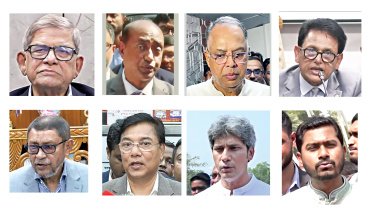


Mirza Fakhrul Islam Alamgir, the Local Government, Rural Development, and Co-operatives Minister, emphasized the importance of rebuilding the nation based on democratic values as the primary challenge for the new government. He stated that the recent political transition was significant and acknowledged that instant solutions were not feasible given the circumstances.
Fakhrul dismissed the need for a white paper on the interim government’s actions, highlighting their successful completion of the transition to democracy. He defended the inclusivity of the recent election in response to questions about the Awami League’s participation, stating that it was recognized both nationally and internationally.
The minister addressed concerns about the economy and foreign policy, noting improvements in macroeconomic stability and the banking sector. He emphasized the ongoing efforts to enhance these sectors further and underscored that democratic values would steer government initiatives moving forward.
In a separate development, Law Minister Md Asaduzzaman underscored the importance of judicial integrity, warning against corruption within the judiciary. He emphasized that judges must uphold honesty and integrity, stating that any involvement in corruption would result in administrative and legal repercussions.
Furthermore, Power Minister Iqbal Hassan Mahmood prioritized ensuring a stable power supply during Ramadan and the irrigation season. He aimed to minimize load-shedding during Ramadan and highlighted plans for future power sector enhancements after addressing immediate challenges.
Education Minister ANM Ehsanul Hoque Milon emphasized the need for significant reforms in the education sector to align with international standards. He stressed the importance of incorporating advanced technologies like nanotechnology and artificial intelligence into the educational framework to adapt to the Fourth Industrial Revolution.
Health Minister Sardar Sakhawat Husain pledged to enhance the attendance of doctors in rural hospitals and prioritize eradicating corruption within the health ministry. He emphasized improving service quality to dissuade individuals from seeking medical treatment abroad and outlined plans to make health services more accessible, especially in rural areas.
State Minister for Civil Aviation and Tourism M Rashiduzzaman Millat outlined initiatives to streamline airport services and expedite luggage handling processes for air passengers. He aimed to reduce waiting times and address issues related to ticket shortages, emphasizing the need to improve overall passenger experiences.
State Minister for Finance and Planning Zonayed Saki stressed the immediate implementation of election manifesto commitments and the formulation of short-, medium-, and long-term measures. He highlighted the government’s focus on public comfort and transparency, urging swift action on pledged reforms.
State Minister for Expatriates’ Welfare and Overseas Employment Nurul Haque Nur discussed efforts to reopen Middle Eastern labor markets to expand overseas employment opportunities. He emphasized the significance of remittances in supporting the national economy and highlighted plans to enhance protection for expatriate workers and combat migration-related fraud.
Nur expressed his commitment to addressing the challenges faced by migrant workers and underscored the importance of safeguarding their rights. He called for support and patience as the ministry undertakes its responsibilities under new leadership, emphasizing the critical role of expatriate workers in the country’s economy.