
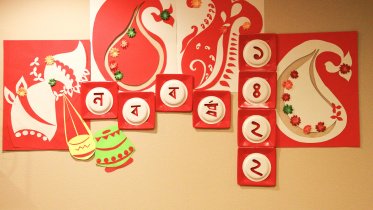


The onset of the Bengali calendar year is a lively commemoration of the rich cultural legacy, serving as a connection to the past and a celebration of identity. Whether in their homeland or far from it, Bangladeshis eagerly await the Pahela Baishakh festivities each year.
Bangladeshi expatriates around the globe mark Pahela Baishakh in diverse ways, ranging from intimate gatherings to elaborate events. These celebrations feature traditional Bengali dishes, folk music and dance performances, Baishakhi fairs, and more. Non-resident Bangladeshi (NRB) women shared insights into their Pahela Baishakh observances outside of Bangladesh.
Dr. Nazia Hussein, a senior sociology lecturer at the University of Bristol in England, noted the sizable first-generation Bangladeshi immigrant community in Bristol, where the Pahela Baishakh celebration typically gathers 120 to 150 people annually.
The day-long event showcases a wide array of food items, including a brunch with over twenty types of pitha and an afternoon spread with tea, chotpoti, fuchka, samosa, shingara, muri, murki, among others, followed by a hearty dinner.
Dr. Hussein highlighted the centerpiece of their celebration as the children’s performances, with last year’s event featuring twenty-six children in a skit comprising drama, dance, and song. The children undergo three months of rehearsals leading up to the performance, a process cherished more than the actual show.
Reflecting on the Pahela Baishakh celebrations in Bangladesh, Dr. Hussein expressed no yearning for them, believing the Bristol celebration to be culturally richer and more aligned with tradition than those in Bangladesh, which have evolved due to cultural transformations.
Shahzia Sarwar, an architecture and urban design lecturer residing in Portland, Oregon, shared her experiences participating in grand Pahela Baishakh events across New York, California, and Oregon. She emphasized the celebration as a vibrant cultural bridge uniting Bangladeshis through Mangal Shobhajatra, cultural programs, traditional attire, photoshoots, and delectable Baishakhi delicacies like bhorta, panta-ilish, pitha, fuchka, and jhalmuri.
Sarwar emphasized the strong sense of community unity and cultural preservation during Pahela Baishakh, underscoring the importance of active participation in cultural activities for her family.
Rabeya Zahed, an HR professional in New South Wales, Australia, shared her unique experience of celebrating her birthday on the same day as Pahela Baishakh, with the latter taking precedence in their celebrations. While Zahed prepares a traditional Baishakhi feast at home, she misses the vibrant childhood celebrations in Bangladesh.
Despite the absence of the traditional Pahela Baishakh ambiance in Australia, various Bangladeshi communities organize elaborate festivals, which Zahed and her family attend as part of their festivities. Private Baishakhi parties are also a common feature of the celebrations.
The global Bangladeshi diaspora eagerly anticipates their annual Pahela Baishakh festivities, embracing the Bengali New Year with cultural performances, traditional delicacies, and a deep-rooted appreciation for their heritage. Despite geographical distances, the steadfast love for their roots and Bengali culture resonates strongly among non-resident Bangladeshis.