
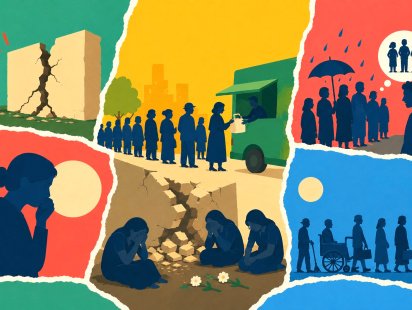


A crack in a boundary wall at Mirpur University College in Dhaka proved fatal for three people standing in line for subsidized essentials. The incident highlighted the impact of poverty on individuals’ ability to respond to danger signals. One victim, Nasima Begum, a cleaner supporting her family, tragically lost her life while trying to collect food for her loved ones. The collapse also claimed the lives of a rickshaw-puller and a local resident.
The tragedy underscored the societal divide between the privileged and the vulnerable. The lack of proper infrastructure and services for marginalized communities was evident as the food distribution truck was parked near an unstable structure, exposing recipients to risks. Despite economic hardships, individuals were compelled to endure unsafe conditions to access essential goods.
The incident raised questions about the welfare system’s effectiveness and the need for more humane distribution methods. Suggestions for improvement include holding responsible parties accountable for safety lapses, establishing secure distribution points, and implementing crowd management strategies to protect vulnerable beneficiaries.
The deaths of Nasima, Firoz, and Beauty shed light on the systemic neglect faced by economically vulnerable citizens. Their tragic fate serves as a stark reminder of the urgent need for reforms to ensure the safety and dignity of all members of society. It is imperative for the authorities to address these issues promptly to prevent similar tragedies in the future.