
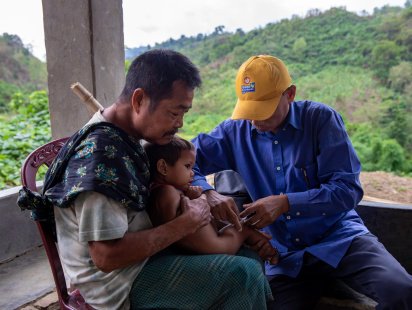


In the rugged hills of Bandarban, a child falling ill poses not just a medical challenge but a test of remoteness, difficult terrain, poverty, and trust. A recent report highlighted in The Daily Star sheds light on the issues surrounding child fatalities and suspected cases resembling measles in Alikadam. For families belonging to the Mro and Marma communities, seeking formal healthcare can be an arduous journey. The trek to the nearest medical facility can span hours, and at times days, involving traversing steep, hazardous paths that incur expenses surpassing their monthly earnings. Consequently, these circumstances often compel community members to resort to traditional remedies, sometimes without genuine choice in the matter.
While it may seem convenient from afar to recommend conventional solutions such as constructing more hospitals, deploying additional medical professionals, and expanding infrastructure, those familiar with the Chattogram Hill Tracts (CHT) understand that this terrain resists uniform approaches. The crisis not only stems from service inadequacies but is deeply intertwined with the unique realities of life in the hills.
A crucial shift in addressing these challenges involves altering our approach to healthcare delivery. Rather than expecting patients to seek medical services, it is imperative to ensure that healthcare reaches them despite geographical obstacles. Introducing mobile healthcare units equipped for vaccinations, maternal and child health services, and basic diagnostics can help bridge immediate gaps. While not novel ideas, their consistent and adequately funded implementation in hard-to-access areas remains limited. Establishing regular outreach programs on predefined schedules known to the communities can enhance both accessibility and trust, making services reliable rather than sporadic.
Investing in individuals from these communities holds equal significance, particularly in narrowing the healthcare divide in the CHT region. Training local youth as community health workers could serve as a vital long-term strategy. These workers, familiar with the local language, cultural intricacies, and terrain, can play a pivotal role in identifying early signs of outbreaks, providing basic care, supporting immunization campaigns, and facilitating timely referrals. Their presence can be instrumental in prompting prompt action where external advice might be met with hesitance.
Nonetheless, the issue of referrals remains a weak link. When a child’s condition worsens, the window for effective treatment is narrow. For many hill families, arranging transportation—whether by foot, boat, or motorcycle—poses logistical challenges and financial strain. Establishing a community-based emergency transport and referral system becomes crucial. This may involve locally managed funds to cover urgent travel expenses, transportation options tailored for hilly terrains like motorbike ambulances, and streamlined communication networks to alert medical facilities in advance. Without such mechanisms, even the best primary care services may fall short in preventing avoidable deaths.
Another aspect that warrants careful consideration is the role of traditional healers and Indigenous knowledge systems. Often viewed as obstacles, these entities are deeply embedded sources of trust within the communities. A more practical approach would involve engaging local healers to identify warning signs and promote timely referrals, while acknowledging and respecting their significance in the community. This approach could help bridge the gap between traditional and modern healthcare practices.
Adjusting communication strategies is also essential. Health messages tailored in urban settings may not effectively resonate in remote CHT villages due to language barriers, differing perspectives, and limited exposure to formal education. Hence, community engagement should be participatory and localized. Campaign materials should be crafted in Indigenous languages, adopt the storytelling style prevalent in the hills, and utilize trusted community platforms. When mothers grasp the significance of a vaccine not as an abstract concept but as a shield against a familiar threat, their willingness to seek vaccination increases.
Simultaneously, strategically positioned modest health posts are necessary. These facilities should not aim to replicate urban hospitals but serve as the initial point of contact, offering essential medicines, routine services, and acting as bases for outreach teams. Over time, such initiatives can reinforce the overall referral network, fostering a more responsive and less fragmented healthcare system.
However, all these interventions hinge on a policy framework recognizing the unique advantages and challenges of the CHT. Uniform national strategies often fall short in capturing the diversity and intricacies of hill regions. Dedicated budget allocations, flexible implementation models, and enhanced collaboration between government bodies and non-governmental organizations are imperative. Development partners need to transition beyond pilot projects and support scalable, contextually relevant programs.
The measles outbreak in Bandarban serves as a poignant reminder that healthcare inequality, though not always overt, is keenly felt. Every child in Alikadam deserves an equal chance at survival, irrespective of their birthplace. Addressing this injustice necessitates more than just infrastructure; it requires empathy translated into policy and policy translated into action.
Those familiar with hill communities understand that they are not passive recipients of aid but resilient, resourceful, and open to engagement when approached with respect and understanding. The challenge ahead lies in listening, adapting, and taking action. Ultimately, healthcare transcends mere facilities and medications; it is about reaching people where they are and standing by them in their most