
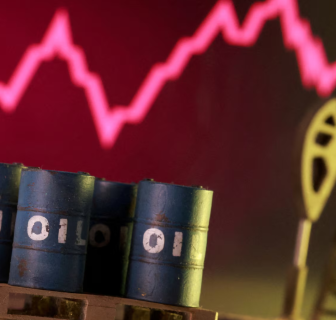


The International Energy Agency announced on Wednesday that its member countries would release 400 million barrels of oil from their reserves to mitigate the impact of the ongoing conflict in the Middle East. This marks the largest oil release ever undertaken by the agency.
Expressing the gravity of the situation, IEA Executive Director Fatih Birol stated, “The oil market challenges we are facing are unprecedented in scale, therefore I am very glad that IEA member countries have responded with an emergency collective action of unprecedented size.”
The coordinated release of emergency oil stocks surpasses the 182 million barrels released in 2022 in response to Russian leader Vladimir Putin’s invasion of Ukraine. The IEA noted that the release will be conducted according to the individual circumstances of each member country and may be supplemented by additional emergency measures by certain nations.
The announcement coincided with a virtual meeting of the Group of Seven leading economies, where they discussed the widespread economic repercussions of the ongoing US-Israeli conflict with Iran. During the meeting chaired by French President Emmanuel Macron, Japan and Germany declared their intention to tap into their strategic oil reserves.
Japanese Prime Minister Sanae Takaichi revealed that Japan would initiate the release of reserves as early as Monday, while German Economy and Energy Minister Katherina Reiche stated that Germany also planned to release reserves, although a specific date was not provided.
Takaichi emphasized Japan’s heavy reliance on the Middle East for oil and the anticipated impact, stating, “Given Japan’s exceptionally high dependence on the Middle East (for oil) and as we will be severely impacted, we plan to utilize Japan’s strategic petroleum reserves.”
Reiche disclosed that Germany would release a total of 2.4 million tons of oil. The oil market has experienced significant volatility since the commencement of strikes between the US, Israel, and Iran, with Iran retaliating by targeting oil-rich regions in the Gulf and disrupting the flow of oil through the vital Strait of Hormuz.
US Interior Secretary Doug Burgum reassured that the transit issue was temporary, stating, “What we have here is not a shortage of energy in the world. We’ve got a transit problem.”
A French official highlighted the G7’s desire for coordinated action, emphasizing that the current challenge was more about price than supply shortages. Ipek Ozkardeskaya, a senior analyst at Swissquote Bank, noted that the 400 million barrel release, while significant, would only provide a temporary solution given the daily oil consumption of IEA countries.
She indicated that the announcement helped stabilize oil prices on Wednesday, attributing the decreased oil production in the Middle East to the ongoing conflict in Iran. In response to the oil price fluctuations, countries worldwide have implemented various measures, such as deploying military personnel to guard oil depots, imposing stricter controls on gas supplies, and cracking down on price gouging at petrol stations.
The 32 IEA member countries collectively hold over 1.2 billion barrels of public emergency oil stocks, with an additional 600 million barrels held as industry stocks under government mandates.