
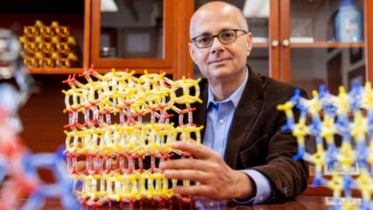


A renowned Nobel Prize winner has developed an environmentally friendly device designed to extract water from the atmosphere, potentially providing crucial assistance to regions affected by droughts and storm damage, as reported by The Guardian. Professor Omar Yaghi, recipient of the 2025 Nobel Prize in Chemistry, engineered this innovative system using reticular chemistry to create materials capable of collecting moisture even in dry or desert environments. These units, similar in size to a 20-foot shipping container, operate solely on ultra-low-grade thermal energy and have the capacity to generate up to 1,000 liters of clean water daily without the need for centralized electricity or water infrastructure.
Yaghi emphasized the pressing need for improved water supply resilience in vulnerable regions, especially small island nations prone to extreme weather events, following the destructive hurricanes like Melissa and Beryl that caused widespread flooding, property destruction, and agricultural losses in the Caribbean. In Grenada, specifically on the islands of Carriacou and Petite Martinique, this technology is viewed as a potential remedy for communities still grappling with water scarcity post-Hurricane Beryl in 2024. Local government official Davon Baker highlighted the key advantages of the invention, addressing issues such as the high costs, environmental impact, and contamination risks associated with water importation, the susceptibility of centralized systems to hurricane-related damages, and the necessity for decentralized solutions that can function independently when traditional infrastructure fails.
Having grown up in a water-scarce desert community in Jordan, Yaghi characterized his creation as a groundbreaking scientific achievement capable of reshaping the material world. He urged global leaders to adopt scientific innovations to combat climate-related challenges. According to a recent United Nations report, nearly three-quarters of the global population resides in water-stressed countries, with approximately 2.2 billion people lacking access to safely managed drinking water and four billion individuals experiencing severe water scarcity for at least one month annually.