
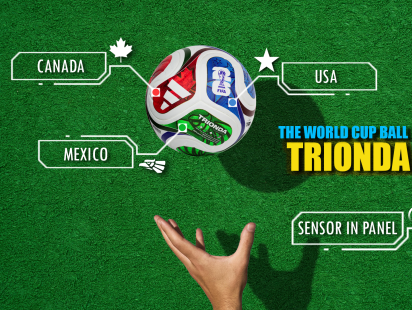


The world’s most popular sporting event has returned after a four-year hiatus. With each edition, FIFA introduces a new official ball that often becomes a focal point of discussion. This year, the official ball, named “Trionda,” has been revealed.
The name “Trionda” in Spanish translates to “three waves,” symbolizing the collaboration of three host countries – Canada, Mexico, and the United States – for the FIFA World Cup. The ball’s design features the colors of all three nations – red, green, and blue – as well as iconic symbols representing each country, such as the maple leaf for Canada, an eagle for Mexico, and a star for the United States.
This unique ball design is among the most vibrant and symbolic in World Cup history. Unlike the traditional 32-panel balls of the past, Trionda only consists of four panels.
Adidas is the manufacturer of the Trionda ball, which will incorporate a new version of Adidas’ Connected Ball Technology. This technology involves embedding advanced sensors within the ball to provide real-time data on its movement.
The sensor in the Trionda ball is positioned in one panel, ensuring that the ball’s balance is not compromised. The sensor can monitor the ball’s rotation, position on the pitch, and every touch, transmitting this data to the Video Assistant Referee (VAR) in real-time for improved decision-making during matches.
Even though this new technology aims to enhance decision-making efficiency, some football enthusiasts have mixed feelings about VAR and modern technology in the sport. The potential benefits of real-time data must be weighed against concerns about delays in decision-making impacting the flow of the game.
While the technology behind the Trionda ball offers promising advancements, the unpredictability of the World Cup often leads to unexpected outcomes on the field. Fans will have to wait and see how this innovative ball impacts the tournament, as debates about the role of technology in football continue among supporters and critics alike.