
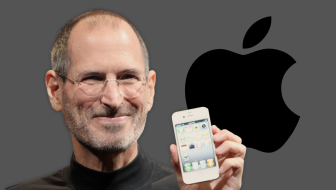


Fifty years ago today, a young engineer, Steve Wozniak, completed the design of a computer circuit board. Despite presenting it multiple times to his employer, Hewlett-Packard, they rejected the idea. Consequently, Wozniak, alongside his friend Steve Jobs, decided to venture into entrepreneurship.
On April 1, 1976, Jobs, Wozniak, and a third partner, Ronald Wayne, formalized their partnership in the Jobs family garage in Los Altos, California. Unfortunately, Wayne sold his 10% stake for a mere $800 just a fortnight later due to financial concerns, a decision he would later regret. However, for Jobs and Wozniak, this marked the beginning of a transformative journey.
Apple Inc. went public in 1980, but its journey was tumultuous. In 1985, Jobs departed following conflicts with the board and then-CEO John Sculley, whom he had enticed from Pepsi with a proposition to change the world. Apple encountered significant challenges without Jobs, leading to financial struggles by the mid-1990s.
The tide turned in 1997 when Apple acquired NeXT for $429 million, bringing Jobs back into the fold. A $150 million investment from Microsoft further bolstered Apple’s prospects, ensuring the continuity of Office on Mac. This period marked a remarkable resurgence for Apple under Jobs’ leadership.
Jobs spearheaded a series of groundbreaking products that redefined industries. The iPod, introduced in 2001, revolutionized the music consumption landscape through iTunes integration. The iPhone, unveiled in 2007, set new standards in mobile technology with its touch screen and iOS platform, outpacing competitors like BlackBerry.
Subsequent launches, such as the App Store in 2008, further solidified Apple’s dominance in the smartphone market. While Apple faced setbacks with products like the Lisa, Apple III, and MobileMe, its successes with the iMac, iPod, and iPhone reshaped the tech landscape.
Following Jobs’ passing in 2011, Tim Cook assumed the CEO role and oversaw Apple’s continued growth. The company expanded its product line with the Apple Watch, AirPods, and transition to Apple Silicon chips for Macs. Additionally, Apple ventured into entertainment with Apple TV+ and produced acclaimed shows like “CODA,” which won an Oscar for Best Picture.
Today, Apple boasts a workforce of around 166,000 employees and over 2.5 billion active devices globally, solidifying its status as a trillion-dollar company. Despite facing competition in the AI space, Apple’s commitment to innovation and expansion remains unwavering as it navigates the evolving tech landscape in the years ahead.