
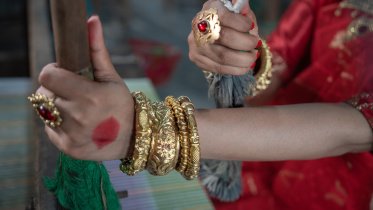


Salma, an artisan from Jhenaidah, has been crafting jewellery by hand for over a decade. Unlike many in the industry, she did not inherit the craft but learned it gradually, starting in a factory making small pieces and advancing through practice and formal training. Following instruction from the Shishu Niloy Foundation (SNF), she expanded her repertoire to include larger earrings, necklaces, and chokers.
What sets Salma apart is not just her skill development but also her entrepreneurial spirit. Today, she operates her own workshop, providing employment for 10 to 12 individuals. In Bangladesh’s jewellery market, there is often a misconception that handcrafted pieces should be judged against machine-made alternatives without recognizing the unique qualities of artisanal work.
According to Tahmina Shaily of Shoilee, handmade jewellery is distinguished by its imperfections, such as a rough texture that reflects the human touch. Unlike machine-made items, handcrafted pieces often exhibit visible signs of construction and require a certain metal thickness to maintain durability during carving and shaping processes.
Lora Khan of 6 Yards Story further explains that machine-made jewellery tends to have a uniform, stamped appearance, while handcrafted pieces showcase the artistry behind their assembly. Therefore, the value of handmade jewellery transcends mere symmetry and polish, emphasizing the human connection and labor-intensive production process.
Shaily highlights that handmade jewellery embodies multiple narratives, from the designer’s vision to the artisan’s craftsmanship and the market preparation phase. Each piece carries layers of effort, testing, and emotional investment, resulting in a unique accessory that represents collective labor and creativity.
The shift towards incorporating design elements into handcrafted jewellery signifies a crucial evolution in the industry. Tanwy Kabir of Canvas emphasizes that traditional Bangladeshi jewellery is not static but a reflection of evolving identity and cultural memory. By reinterpreting heritage motifs in contemporary designs, artisans preserve local traditions while adapting them to modern aesthetics.
The visual identity of Bangladeshi handcrafted jewellery lies in its connection to regional motifs and cultural heritage. Designers like Khan emphasize the significance of these motifs in maintaining a distinctive visual vocabulary that resonates with wearers without explanation. This localized approach sets Bangladeshi handmade jewellery apart from generic accessories, offering a deeper connection to tradition and identity.
Ultimately, Bangladeshi handcrafted jewellery represents more than just decoration; it embodies craftsmanship, tradition, and community. From artisans like Salma supporting local livelihoods to designers reimagining traditional motifs, the sector intertwines cultural heritage with economic empowerment, showcasing the multifaceted value of handmade jewellery in Bangladesh.