
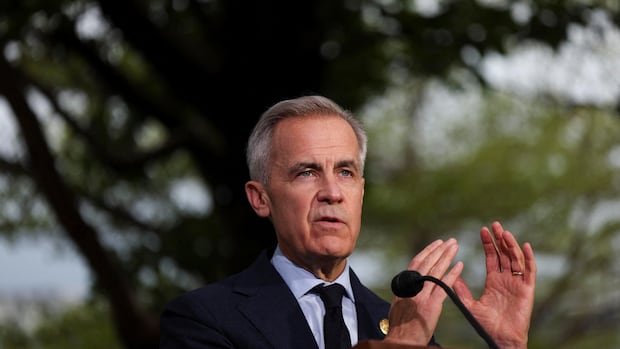
On Wednesday, Prime Minister Mark Carney announced that Canada is open to establishing a mutually advantageous agreement with the United States. However, if U.S. President Donald Trump cannot come to an agreement, Ottawa will persist in its strategy of diversifying trade away from the U.S.
While addressing the Dealbook summit virtually from China, as he concluded a nine-day trade mission throughout Europe and Asia, Carney remarked that Canada is still facing “a series of issues” regarding trade with the U.S.
Despite some advancements, Carney stated, “we’re not there yet” when it comes to finalizing an agreement.
Canada is seeking to persuade the Trump administration to either eliminate or lessen its stringent Section 232 tariffs on various items, including automobiles, steel, aluminum, softwood lumber, and more.
These tariffs have resulted in job losses and closed facilities, jeopardizing what was once one of the most amicable bilateral relationships globally.
Canada is also advocating for the removal of the 50 percent tariffs imposed by Trump on a variety of Canadian goods, which appear to be a retaliation for Canada’s countermeasures against certain U.S. products instituted following the commencement of Trump’s trade war last year.
-
Carney meets with Trump at APEC summit in China
-
Carney secures another China trade deal — but at what cost?
Carney had a meeting with Trump during the Asia-Pacific Economic Cooperation (APEC) summit in China, describing their discussion as “reasonably direct,” although it did not lead to any breakthroughs in trade.
With a U.S. trade agreement still uncertain, Carney noted that Canada’s negotiations with China have been “exceptionally well” and “very rational,” having achieved significant market access for Canadian commodities in exchange for permitting a limited number of Chinese electric vehicles to be imported at reduced tariff rates.
During his visit to Asia, Carney also established two free trade agreements in a single day with the Philippines and the 11-member ASEAN bloc, which collectively represent a market worth $6 trillion.
Additionally, Carney indicated that Canada is on the verge of finalizing a free trade agreement with India within the next three months.
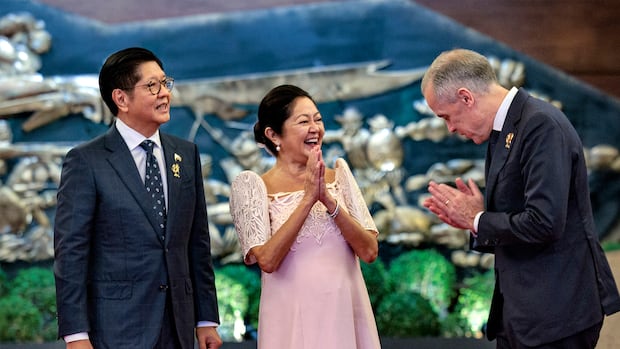
Prime Minister Mark Carney brokered two free trade agreements — slated to be signed next year — that will dramatically slash high tariffs on Canadian exports to the Philippines and the 11-member ASEAN bloc in a continued attempt to diversify trade away from the U.S.
In total, Carney stated that Canada currently enjoys free trade access to markets with around two billion people, a figure that is expected to increase to three billion soon.
“We would like to reach a deal. If the U.S. is not interested in striking an agreement, we are occupied,” Carney remarked.
When questioned about whether the results of the U.S. midterm elections would impact Canada, given the Democrats won both chambers of Congress decisively, Carney replied, “No, is the short answer.”
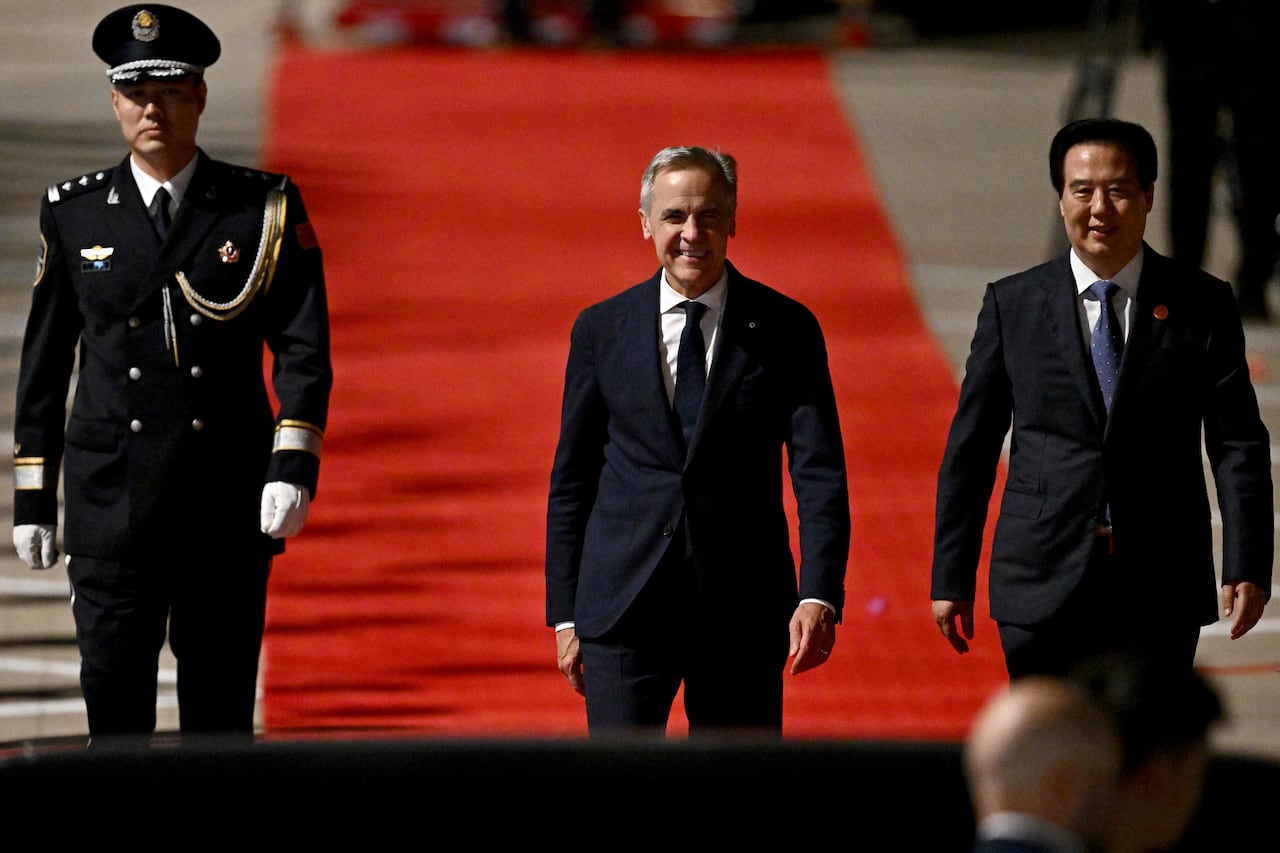
Carney arrives at the Shenzhen Bao’an International Airport on Monday, ahead of the APEC summit in Shenzhen, China. (Pedro Pardo/Getty Images)
Carney stated that the only way to improve relations between Canada and the U.S. is for the U.S. to revoke its trade actions against Canada that are detrimental to vital sectors of the Canadian economy.
“Policy decisions that are made and that will persist will change perspectives,” he noted. “It will require action rather than mere intent.”
-
Trade talks between top Canada, U.S. officials ramping up: sources
-
Here’s how Canada’s new deal with China affects different sectors
However, Carney emphasized that the government does not wish to revert to a pattern of deepening economic dependence on the U.S.
Canada aims to avoid being “coerced” or “subjugated” by the U.S. or any other dominant power, he asserted.
According to Carney, the primary objective of his trade strategy—establishing associate membership with the European Union and improving relations with China—is to safeguard Canada’s long-term sovereignty.
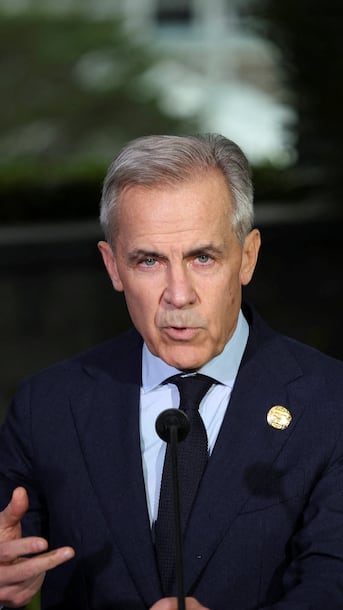
Prime Minister Mark Carney, speaking from China on Nov. 18, said Canada and the U.S. have different types of trade relationships with Beijing, adding that in the ‘hierarchy of issues’ between Canada and the U.S., China is not ‘the top issue at all.’
When asked about Trump’s claim in October that the U.S. “holds all the cards” regarding negotiations with Canada, Carney dismissed the statement.
He stated, “Our cards are that everyone else in the world wants to engage with us,” expressing his determination to double non-U.S. trade within a decade.
Carney acknowledged the transition would not be easy, saying, “There are challenges involved.”
Meanwhile, Conservative MP Adam Chambers, the party’s industry critic, criticized Carney’s approach to strengthen ties with China as an alternative to securing a deal with the U.S.
He cautioned, “If the prime minister believes it is wise to challenge a U.S. administration that possesses significant leverage and potential harm it may impose on Canada — the government should proceed with caution in that regard,” he told reporters on Parliament Hill.