
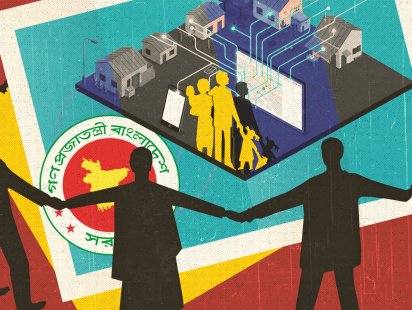


Local government elections in Bangladesh are scheduled for October on a non-partisan basis. The majority of local councils were disbanded by the interim government and restructured in August 2024 after the Awami League regime was ousted. The interim government enacted several ordinances allowing the removal of local government representatives, including city corporation mayors and councillors, municipality mayors and councillors, zila parishad chairpersons, upazila parishad chairpersons and vice-chairpersons, and union parishad chairpersons and councillors. Administrators were appointed to positions such as deputy commissioners and upazila nirbahi officers to oversee local bodies. This unprecedented situation has been ongoing for about two years. Therefore, the announcement of upcoming local government elections is a positive development.
To ensure fair local polls, the Bangladesh Election Commission (EC) released draft codes of conduct for all tiers of local government on June 10 for public feedback until June 30. The proposed codes aim to regulate campaign materials and sound systems more strictly and suggest shorter campaign hours. Violators of the codes will face immediate disqualification. The EC plans to commence local polls with union parishad elections in early October, with the schedule likely to be disclosed in early August.
Local government bodies play a crucial role in democratic governance, allowing citizens to choose leaders responsible for public service delivery, infrastructure development, and poverty alleviation. Local elections empower citizens to hold leaders accountable for meeting their expectations. However, it is essential to grant local government bodies independence and empower them to fulfill their duties effectively.
Recent reports indicate a decline in municipal services due to the absence of elected officials over the past two years. Services like waste management and road maintenance have become irregular, leading to delays in issuing birth certificates and trade licenses. Many regular posts in municipalities remain unfilled, impacting revenue generation and overall governance efficiency.
Challenges lie ahead for the EC in conducting local elections across more than 5,000 local government bodies within a short timeframe. The move towards non-partisan elections aims to minimize the influence of money and power, fostering genuine competition among candidates. However, the EC must be prepared to address potential violence stemming from political influences and financial resources. Ensuring law and order during the electoral process is crucial.
Historically, women’s participation in local government elections has been low. While women are encouraged to participate under the non-partisan system, more efforts are needed to enhance their representation in leadership roles. Promoting gender equality in local governance remains a priority.
Enhancing the autonomy of local government bodies is essential for effective governance in Bangladesh. Decentralizing decision-making processes can improve service delivery and infrastructure development, addressing long-standing challenges in public service provision.
The upcoming local government elections should be conducted peacefully to empower local leaders and transfer development functions to the grassroots level efficiently. Collaboration among stakeholders, including the EC, local administration, and law enforcement agencies, is crucial to uphold electoral integrity. Encouraging the participation of honest, educated candidates committed to social welfare activities, including women and youth, is vital for a successful electoral process.
Efforts to ensure adherence to the electoral code of conduct and engage local associations and civil society organizations will promote transparency and credibility in the forthcoming local elections. By fostering a conducive environment for fair and inclusive elections, Bangladesh can strengthen its local governance system, paving the way for effective public service delivery and infrastructure development.
Dr. Nawshad Ahmed, a retired UN official, economist, and urban planner, can be contacted at [email protected]. The views expressed in this article are solely those of the author.