
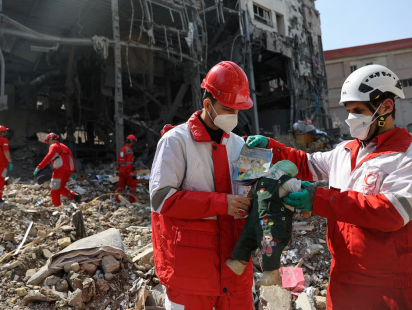


The United Nations observed World Humanitarian Day on 19 August 2026 by lowering its flag to half-mast globally to honor humanitarian workers who have lost their lives. This somber gesture raises concerns about the increasing violence faced by individuals who engage in humanitarian efforts in conflict zones.
While violence against aid workers is not a new phenomenon, the magnitude of these incidents has seen a concerning rise. The Aid Worker Security Database (AWSD) has documented a significant escalation in security-related incidents involving aid workers since 1997. Between 1997 and 2025, 3,398 aid workers lost their lives, 3,380 were wounded, 2,553 were kidnapped, and 930 were detained.
Recent years have witnessed a sharp spike in attacks on aid workers. In 2025 alone, the AWSD reported 350 aid workers killed, 322 wounded, and 712 major security incidents. This surge in violence indicates a deteriorating security landscape for humanitarian personnel.
Data analysis reveals a substantial increase in casualties among aid workers over time. From 1997 to 2006, 514 aid workers were killed and 380 wounded. In contrast, from 2016 to 2025, these figures surged to 1,922 killed and 2,022 wounded, indicating a four-fold increase in fatalities and over five times more injuries.
Despite legal protections afforded to humanitarian personnel during armed conflicts, attacks on aid workers persist. International laws such as Article 71(2) of Additional Protocol I to the Geneva Conventions and Rule 31 of the ICRC’s Customary International Humanitarian Law Study aim to safeguard humanitarian workers. However, gaps in enforcement remain a challenge.
The International Committee of the Red Cross reported 338 attacks on humanitarian workers in 2024 and over 600 attacks on healthcare facilities and personnel in 2023 and 2024. The changing landscape of armed conflicts, with around 130 conflicts recorded in 2024, poses additional challenges to humanitarian operations.
The politicization of humanitarian organizations and the blurring of lines between humanitarian and political actions further exacerbate risks faced by humanitarian workers. Attacks on these workers not only endanger their lives but also disrupt critical services to thousands of civilians who rely on humanitarian aid.
National humanitarian personnel face higher risks of violence compared to international staff. Strategies to protect these workers should prioritize security training, equipment provision, insurance coverage, evacuation plans, and institutional support.
Legal protections must be accompanied by accountability measures. Parties to conflicts must facilitate unimpeded humanitarian access and investigate instances of obstruction or deliberate targeting of humanitarian personnel.
The trend of escalating violence in humanitarian operations underscores the importance of upholding legal obligations to protect aid workers. The UN’s lowered flag serves as a poignant reminder that safeguarding humanitarian workers is a legal imperative, not merely a courtesy.