
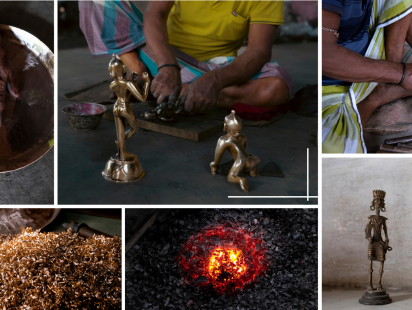


Abu Taleb, aged 57, has a long history of working with bell metal, a craft passed down through generations in his family rather than chosen by him. While reminiscing about his ancestors’ involvement in the trade, he reflects on the present reality where he is the sole remaining family member dedicated to this craft.
Dhamrai, a renowned hub in Bangladesh for producing kasha-pitol (bell metal and brass items) used in dining, rituals, and households, continues to uphold its legacy through a few workshops, elderly artisans, and a diminishing network of traders. Despite the labor-intensive and precise methods involved in crafting plates, bowls, cups, bells, cymbals, and utensils, the industry’s social and economic significance has declined over time.
Working with bell metal presents challenges due to its hard and brittle nature, which also contributes to its value. Taleb emphasizes the importance of maintaining the metal’s purity, ensuring it remains uncontaminated by brass or other materials during the production process to achieve top-quality results.
The manufacturing process involves heating and shaping the metal into various products like plates, bowls, bells, temple cymbals, and cups, focusing on functionality rather than ornamental appeal. Within the craft community, artisans like Niranjan Sarkar and Noyon Sarkar play vital roles in meeting market demands and sustaining their livelihoods through their specialized skills.
Economic pressures loom over the trade, with rising material costs, particularly for copper, impacting production expenses. Taleb highlights the difficulty in sourcing tin and the necessity to recycle old bell metal or brass items due to resource constraints. The fluctuating prices of materials not only affect profits but also increase business risks.
In addition to economic challenges, the craft faces practical obstacles such as power shortages that disrupt production schedules. Despite these hardships, Dhamrai’s bell metal craft perseveres, catering to niche markets and selective buyers who value the tradition and health benefits associated with using original bell metal products.
While the craft continues to exist, its future remains uncertain as fewer families engage in the trade, costs escalate, and infrastructural issues persist. The survival of Dhamrai’s bell metal tradition hinges on maintaining craftsmanship, quality standards, and sustaining merchant networks to meet specialized demands.
Abu Taleb’s dedication to preserving the craft underscores the delicate balance between tradition and modern challenges. As the industry evolves, the legacy of bell metal craftsmanship endures, symbolized by the rhythmic hammering, commitment to authenticity, and the dwindling presence of successors to carry forward this age-old tradition.