
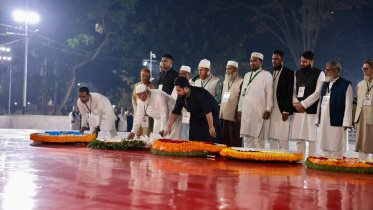


The recent presence of Jamaat-e-Islami Ameer Shafiqur Rahman at the Central Shaheed Minar has generated discussions within political and social spheres, attracting attention to this notable visit.
For the first time in 74 years since the 1952 Language Movement, a leader of the Bangladesh Jamaat-e-Islami laid a wreath at the Central Shaheed Minar to honor the language martyrs. While other factions in the Jamaat alliance have commemorated the day in the past through events like rallies and discussions, it was unprecedented for a Jamaat chief to publicly offer floral tribute at the monument.
Shafiqur explained that the reason for the delayed floral tribute and the motivation behind this year’s visit was based on “state protocol.” He emphasized that as the opposition leader in parliament, he felt it was his duty to participate in the ceremony with his colleagues.
Accompanied by members of the opposition alliance, Shafiqur visited Shaheed Minar after the president, prime minister, and cabinet members, laying wreaths, saying a brief prayer, and addressing the media. When asked about the party’s stance on offering floral tributes, Shafiqur avoided the question, suggesting it was inappropriate for the solemn occasion.
During his speech, Shafiqur extended remembrance beyond the Language Movement martyrs to include those who sacrificed their lives in various historical events. He highlighted the importance of honoring all martyrs, including those who fought against fascism and for the nation’s rights.
Regarding the realization of their aspirations, Shafiqur expressed that their expectations have not been met, emphasizing the ongoing struggle against fascism, terrorism, extortion, and corruption until a just society is established.
After paying respects at the Shaheed Minar, Shafiqur and his party colleagues visited Azimpur Graveyard, where they prayed at the graves of three language movement martyrs.