
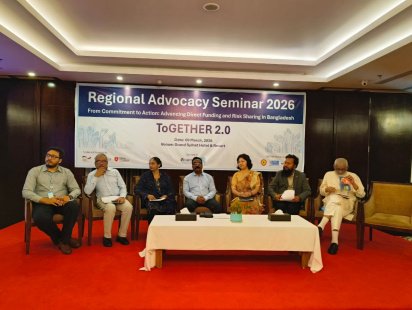


Development experts and aid organizations are advocating for increased direct and flexible funding to local and national non-governmental organizations (NGOs) to promote fair partnerships and equitable risk-sharing.
This call to action was made during a regional advocacy seminar named ToGether 2.0, which took place in Sylhet City and was hosted by Efforts for Rural Advancement (ERA).
The speakers highlighted Bangladesh’s current humanitarian challenges stemming from climate change, frequent natural disasters, and displaced populations. They emphasized the crucial role played by local and national organizations as first responders in emergencies.
Despite international commitments to localize humanitarian aid, the speakers noted the limited opportunities for direct funding to local organizations. This limitation often leads to delays in resource distribution at the grassroots level and escalates administrative expenses.
During the panel discussion, participants put forward various recommendations. These included advocating for increased direct and flexible funding for local organizations, implementing multi-year funding mechanisms, establishing specific funds to bolster local initiatives, and formulating policies for fair risk-sharing among the government, donors, and international bodies.
Key figures in attendance at the seminar included Khan Md. Reza-Un-Nabi, the divisional commissioner of Sylhet, as the chief guest. Notable speakers included Kirti K from Malteser International, Buli Hagidok from Food for the Hungry, Khalid Bin Masud from Unesco, Mohammad Shahzed from Plan International, Hasan Ahmed Chowdhury from the Foundation for Integrated Development Bangladesh (FIDB), and Md Matiur Rahman from Gonoshasthaya Kendra.