
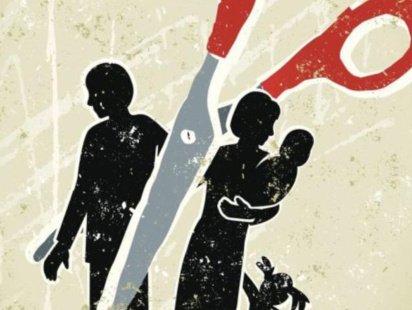


In Bangladesh, divorce is frequently viewed not as a legal dissolution of a marriage that is no longer sustainable, but as a moral shortcoming, particularly when it comes to women. While a widow often receives sympathy, a divorced woman is often met with suspicion, rumors, and social exclusion, implying that her value diminishes after the end of her marriage. This perspective is particularly challenging in a society where divorce is becoming more commonplace.
Recent findings from a Prothom Alo investigation revealed that in Dhaka, a divorce takes place approximately every 40 minutes on average. The trend is also on the rise outside the capital. Data from the Bangladesh Bureau of Statistics indicates that the crude divorce rate has doubled, from 0.7 per 1,000 individuals in 2021 to 1.4 per 1,000 individuals in 2022. These statistics highlight that divorce is no longer an anomaly but a natural aspect of societal dynamics.
The decision to end a marriage does not always stem from violence. Relationships can deteriorate due to trust issues, shifting priorities, unmanageable conflicts, or simply because the individuals no longer wish to remain together. The persistent stigma surrounding divorce becomes more concerning when juxtaposed with the reality of marriage. The Bangladesh Violence Against Women Survey 2024 revealed that a significant portion of women in Bangladesh experience intimate partner violence, emphasizing that leaving a marriage may be a necessary step towards safety and dignity.
The disparity lies in how society judges women who divorce compared to men. While women often face public scrutiny and shaming, men’s divorces are frequently regarded as private matters. Stigma, as described by Erving Goffman, can discredit a person and burden their social identity. This burden is evident when a divorced woman is unfairly stigmatized for a relationship that was not solely under her control. The psychological impact of this stigma can be severe, leading to internalized shame and emotional distress for both the woman and her children.
In rural Bangladesh, where women have limited educational and financial independence, divorce can have far-reaching social and economic repercussions, impacting a woman’s living situation, support system, and ability to rebuild her life with dignity.
It is crucial to recognize that divorce is often a last resort and not a personal failure. The real failure lies in a society that equates a woman’s marital status with her moral value. This pressure to conform to societal norms is not solely enforced by men but is also perpetuated by women within the same social circles. A just society would respect a woman’s autonomy in choosing her relationships, preserve her privacy, and refrain from turning her personal decisions into public judgment. Only then can divorce be viewed as a legal transition rather than a social punishment driven by societal biases.
**Lina Dilruba Sharmin is a communications and knowledge management specialist.**
*Views expressed in this article are the author’s own.*