
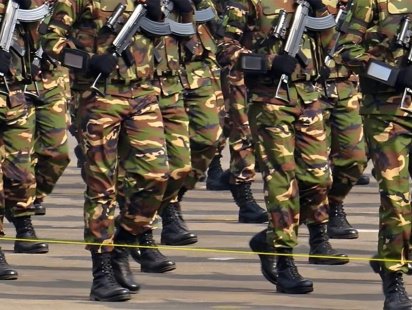


In the BNP’s election manifesto, there is a proposal to create a National Security Council and develop a new national security strategy. Tarique Rahman, the party’s chairperson and current prime minister of Bangladesh, reiterated this plan during a speech to retired officers of the Bangladesh Armed Forces on February 7, 2026. He emphasized that if the BNP came into power, the government would collaborate with former and current army officers to establish an effective National Security Council. The focus on structural security reform during the address was particularly notable.
Over the past few decades, Bangladesh’s security landscape has undergone significant transformations. Factors such as cross-border militant networks, cyber threats, digital financial vulnerabilities, maritime competition in the Bay of Bengal, regional geopolitical tensions, violent extremism, radicalization, and transnational crime have converged, blurring the distinction between internal and external security. Foreign clandestine activities and digital campaigns can now impact domestic stability, while maritime security influences economic resilience. The need for a structured, enduring system that integrates intelligence, aligns defense policies with national strategies, and preempts risks before they escalate has become imperative.
Presently, Bangladesh relies on various coordination mechanisms for national security. The National Committee for Security Affairs (NCSA), established in 2019 following the approval of the National Defence Policy 2018, is chaired by the prime minister and includes senior ministers, service chiefs, intelligence heads, and top civil servants. While the NCSA serves as the highest policymaking body for national security matters in Bangladesh, there is also the National Committee for Intelligence Coordination (NCIC), set up in 2009 to facilitate intelligence sharing among key security agencies. Additionally, the National Security Affairs Cell under the Cabinet Division, formed in 2019, offers administrative support but lacks the authority and resources to function as a strategic nerve center.
Although these mechanisms represent progress in coordination, they are committee-driven rather than system-driven. The NCSA, while inclusive and consultative, lacks a permanent strategic secretariat with clearly defined analytical divisions. The intelligence coordination structure enhances information sharing but falls short of institutionalizing unified national assessments or long-term planning, leading to fragmentation. Despite having capable intelligence institutions like the Directorate General of Forces Intelligence (DGFI), National Security Intelligence (NSI), Special Branch (SB), Criminal Investigation Department (CID), Border Guard Bangladesh (BGB), and the Coast Guard, responsibilities are dispersed, and there is no single authoritative body tasked with synthesizing assessments for consolidated national guidance.
This model can result in ambiguity regarding the definition of national security priorities, the harmonization of internal and external intelligence, and the alignment of defense modernization with broader strategic goals. While large committees facilitate consultation, they do not replace continuous analytical work supported by dedicated professional staff. The absence of a national security adviser (NSA) role could be seen as a weakness, as without an NSA-led secretariat, coordination remains reliant on leadership capacity rather than institutional design, making security governance reactive rather than proactive.
However, restructuring does not imply undermining existing agencies; instead, it can enhance their effectiveness. For instance, the DGFI can continue providing defense and external intelligence, while the NSI can focus on internal security intelligence and counterterrorism. Law enforcement and border agencies can maintain their operational mandates. An efficient national security council secretariat would not supplant these organizations but would integrate their outputs, identify intelligence gaps, synchronize reporting cycles, and ensure unified assessments for national leadership rather than fragmented briefings.
India implemented similar structural reforms by establishing a secretariat led by the national security adviser under political leadership. The key innovation was not just forming a council but creating a permanent analytical hub with specific divisions for strategic planning, intelligence synthesis, and defense coordination. Bangladesh could adopt a comparable approach within its constitutional framework. Importantly, national security should be bipartisan since security threats do not differentiate between administrations. A successful National Security Council must be institutionalized, accountable, and focused on continuity.
A reformed structure should feature a national security council chaired by the prime minister, supported by a permanent national security council secretariat led by a security adviser. Below this office, distinct directorates for strategic planning, intelligence coordination, defense affairs, foreign policy integration, cybersecurity, maritime security, and crisis response would offer analytical depth and structured oversight. The staffing should comprise experienced civil servants, former military officers, ex-intelligence professionals, and former foreign service officials.
Bangladesh is at a juncture where incremental adjustments are inadequate. The country’s expanding geopolitical and economic significance necessitates a mature and disciplined security framework. Establishing a structured, accountable, and non-partisan security council system would not be a political victory for any party but rather an institutional investment in the state’s long-term stability and resilience.