


The emergence of Bangladesh in 1971 followed years of hardships and a prolonged conflict lasting 9 months. Post the 1947 partition, Bangladesh was established as East Pakistan within the larger Pakistan. Despite the majority speaking Bangla, Mohammad Ali Jinnah of West Pakistan insisted on Urdu as the sole national language, disregarding Bengali representatives’ pleas. The turning point came on February 21, 1952, when public outrage transformed into a protest led by students, journalists, and others against linguistic suppression. In response, Pakistani leaders resorted to violence, resulting in the martyrdom of brave individuals like Salam, Rafiq, Barkat, Jabbar, and Shafi. Eventually, the Pakistani government had to relent.
Since 1953, on February 21 each year, literary journals and magazines have been released to honor this sacrifice, featuring works from writers of all ages. To document this rich history of publications nationwide, Bangla Academy initiated a “Sangkalan” to compile the names of these publications, their publishers, and the dedicated writers preserving the essence of the language movement. Aninda Rahman, a custodian of historical pieces, has taken on the responsibility of highlighting this significant chapter in our history.
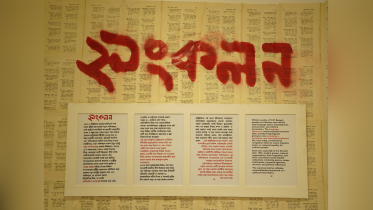
Alliance Française de Dhaka (AFD) recently unveiled the “Sangkalan” exhibition on February 20, showcasing special publications and archives related to February 21 across various districts in Bangladesh. The event commenced with patriotic speeches, followed by a collective rendition of a segment from the song “Amar Bhaier Rokte Rangano.”
Aninda Rahman, an innovative filmmaker, meticulously gathered materials like paper cuttings, pamphlets, and magazines spanning seven decades from his network. The Gallery Zoom walls were adorned with archived pages from Bangla Academy, capturing a fraction of the publications, alongside magazines and advertisements. Aninda mentioned that the exhibition merely scratches the surface of the extensive collection.
The gallery exhibited vintage newspapers featuring illustrations and tributes from various businesses like Nabisco, Jahaj Marka and Nouka Marka tar, Phoenix Leather Complex, Gawsia Jute Mills Ltd, and others in honor of the language movement. Additionally, there was a display of stickers resembling the “Prabhat Feri,” a traditional dawn procession towards the “Shaheed Minar,” the martyrs’ memorial.
The showcase of magazines like Begum, Bichitra, Nabarun, echoing tales told by my mother, who is related to freedom fighters, felt surreal. This exhibition not only preserves relics from our past but also educates younger generations on the significance of the language movement recognized globally by UNESCO. The exhibition will run until February 28, offering a glimpse into our heritage and the valor of our predecessors.