
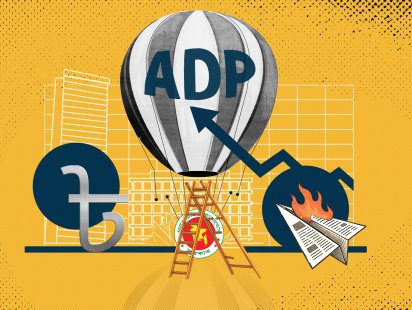


The upcoming national budget for FY2026-27 serves as a blueprint for the government’s financial strategy for the next fiscal year. Presented by the newly elected administration following a period of interim governance, it outlines the approach to address economic recovery, fiscal responsibility, and long-term growth. Against a backdrop of inflation, fiscal limitations, and concerns over implementation capabilities, the budget emphasizes a resurgence in development expenditure, raising questions on the readiness of institutions tasked with executing the country’s development agenda.
With a total allocation of Tk 9.38 lakh crore, the budget stands as the highest in the nation’s history, representing a 19% increase from the previous year’s revised budget. Of this amount, Tk 3 lakh crore is dedicated to the Annual Development Programme (ADP), marking the largest allocation ever. This shift from restrained spending in recent years signals a return to substantial public investment after a period of fiscal prudence.
The sectoral breakdown of the ADP demonstrates a blend of continuity and change in Bangladesh’s development priorities. Investments in transport and communication lead with Tk 50,093 crore, emphasizing infrastructure enhancement. Education and healthcare receive a combined allocation of Tk 83,121 crore, highlighting a shift towards human capital development. Notably, the Local Government Division secures the highest allocation at Tk 33,735 crore, underscoring the focus on local service delivery and rural progress.
While the budget priorities are commendable, their effectiveness hinges on addressing broader development challenges. Persisting issues like low private investment, infrastructure deficiencies, regulatory inefficiencies, and limited access to finance continue to impede economic growth and job creation. The success of the proposed ADP will be gauged by its ability to tackle these structural obstacles effectively.
A key point of contention in the budget proposal is the substantial block allocation of around Tk 97,300 crore, earmarked for projects pending final approval. This departure from traditional approval processes raises concerns regarding transparency, accountability, and project efficacy. Transparent project evaluation and prioritization are crucial for the success of public investments, and the significant block allocation raises doubts about the alignment between planning and allocation.
The critical question remains whether the proposed ADP targets can be executed efficiently. Recent trends indicate a decline in ADP implementation rates, pointing to persistent challenges such as procurement delays, land acquisition issues, bureaucratic hurdles, coordination issues, and capacity limitations. Without addressing these obstacles, the substantial increase in ADP allocation risks widening the gap between development aspirations and implementation realities.
Another area of concern is the credibility of financing. The budget sets a revenue collection target of Tk 6.95 lakh crore against total expenditures of Tk 9.38 lakh crore, resulting in a significant fiscal deficit. Given past revenue collection shortfalls, particularly by the National Board of Revenue (NBR), meeting financing requirements remains a key risk to budget implementation. Failure to meet revenue targets may lead to adjustments in development spending, as evidenced by previous ADP reductions due to revenue shortfalls.
While an expanded ADP signals a return to development ambitions, success hinges on transparent project selection, effective implementation, and credible financing. Until these key elements are addressed, doubts may persist regarding the realization of these development goals.