
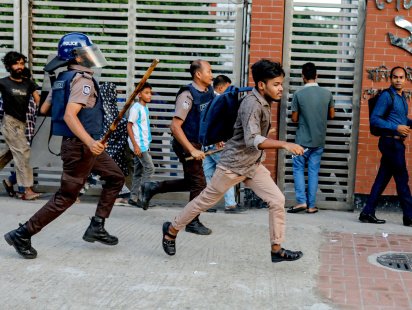


In Bangladesh, the police have been observed to bypass negotiations and immediately resort to force when dealing with crowds. This departure from standard crowd control practices in democratic societies, where a gradual escalation of tactics is typically employed, raises concerns about the behavior of law enforcement officers on the ground.
Instances have been documented where prominent political figures and activists have been subjected to physical violence by the police, showcasing a tendency towards swift and aggressive action. This aggressive approach is not limited to high-profile individuals but extends to ordinary citizens who have experienced disproportionate use of force during even minor altercations.
A significant contributing factor to this behavior is the perceived lack of neutrality within the police force, which has often been seen aligning with the ruling party in power. Past instances have shown party affiliates operating alongside police officers during crackdowns, blurring the lines between law enforcement and political muscle.
Despite recent changes in government, visible alterations have primarily been limited to superficial aspects such as uniform changes. Concerns persist regarding the impartiality of law enforcement, with reports of opposition activists being targeted in the presence of ruling party supporters under police supervision.
Furthermore, the police have been criticized for disregarding established protocols, including the restrained use of force and timely presentation of detainees before a magistrate. This pattern of behavior, spanning across different political administrations, underscores the systemic challenges within the institution.
Addressing these issues requires more than just retraining officers in de-escalation tactics. Structural reforms are imperative, including holding accountable those issuing unlawful orders, establishing an independent oversight body for police complaints, safeguarding whistleblowers, and ensuring a clear separation between political entities and law enforcement operations.
By enforcing these measures consistently, a police force that prioritizes the rule of law over partisan interests can be cultivated. Ultimately, creating a system where officers feel empowered to reject illegal directives without fear of reprisal is essential in fostering a culture of accountability and professionalism within the police force.