
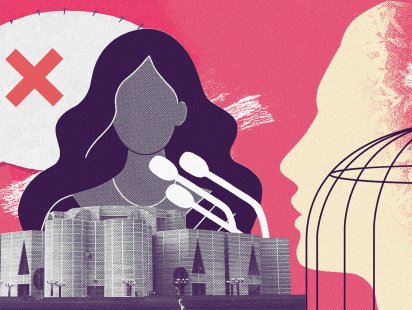


By the middle of May, the parliament is set to finalize the filling of the 50 reserved seats designated for women. Recently, the ruling BNP disclosed its candidates for the 36 allotted seats, reflecting its parliamentary representation. Other parties like Jamaat-e-Islami are expected to follow suit soon. However, amid increasing calls for parliamentary reforms triggered by a mass uprising, which includes demands for enhancing women’s reserved seats and conducting direct elections for them, this routine process now serves as a litmus test for the country’s willingness to transition from symbolic inclusion to substantive power-sharing.
Without a fundamental reimagining of the current system, there is a risk of perpetuating the very inequalities purportedly being dismantled.
The imperative of ensuring equal participation and representation of women in parliament transcends mere democratic ideals; it is intrinsic to the essence of democracy itself. True representation must extend beyond superficial gestures and encompass the diverse realities of women across different socio-economic backgrounds, ethnicities, religions, disabilities, and identities. Without this comprehensive representation, inclusivity becomes illusory, and democracy inadvertently fosters exclusion.
Globally, women continue to be underrepresented in political spheres, especially in decision-making capacities. Women from historically marginalized communities face even greater obstacles. While gender quotas have been adopted by many countries to bridge the representation gap, few have effectively addressed the layered challenges faced by minority women. The concept of intersectionality remains largely absent in political systems worldwide, including Bangladesh’s, where structural inequalities persist in determining who has a voice, who leads, and who is left marginalized.
Although the aspiration for gender parity in political leadership was articulated decades ago, progress has been inconsistent and often superficial. Structural barriers such as entrenched social norms, limited access to resources, and systemic biases within political parties continue to impede women’s participation. These barriers impact women’s confidence, mobility, and ability to access political networks, thereby constraining their leadership potential and ability to serve their communities and the nation effectively.
While the system of reserved seats for women in parliament has increased numerical representation, sheer numbers do not equate to genuine power. Often, women elected to these seats are treated as secondary legislators, lacking direct constituencies, independent mandates, or substantial control over resources. Their political relevance hinges on party leadership rather than voter support, reinforcing a hierarchical structure that diminishes their agency.
In such a setup, accountability primarily flows upwards, not outward. When MPs owe their positions to party patronage rather than public trust, their capacity to challenge party norms or advocate for meaningful change is stifled. In this context, reserved seats risk becoming a barrier rather than a foundation for women’s political empowerment, thereby impeding democratic accountability.
Instances of violence against women in politics, whether physical, psychological, or digital, remain prevalent across the country. Women MPs have encountered harassment, intimidation, and gendered attacks aimed at silencing them or undermining their credibility. Without robust institutional safeguards, enforcement mechanisms, and bipartisan commitments to combat such abuses, the political environment will remain unwelcoming for many women, deterring potential future women leaders.
Media portrayal exacerbates this issue, often focusing more on women politicians’ personal lives, appearances, or marital statuses rather than their ideas. This trivialization not only undermines individual leaders but also perpetuates societal biases that discourage women from engaging in public life.
Given these challenges, a reevaluation of women’s representation in politics, particularly in parliament, is imperative. Political parties should enhance transparency in their nomination processes, prioritizing merit-based criteria over loyalty to party elites. Reserved-seat MPs should establish meaningful connections with citizens through constituency linkages or structured public consultation mechanisms to broaden their accountability beyond party structures. Additionally, transitioning to direct elections for these seats is crucial.
Establishing cross-party women’s caucuses is vital. These platforms can facilitate collaboration among women MPs across political divides to advance common agendas like combating gender-based violence, promoting equitable budgeting, and enhancing social inclusion. However, for caucuses to be effective, they require institutional support and recognition to influence legislation, oversight, and national priorities.
Lessons can be drawn from models in advanced democracies where women’s parliamentary forums have demonstrated the ability to influence national agendas and hold systems accountable. Bangladesh boasts capable and dedicated women leaders, yet what is lacking is a political framework that empowers them to wield power autonomously and effectively.
As the deadline for finalizing reserved seats approaches, the public has the right to seek resolutions to concerns surrounding these seats. The focus should shift from merely ensuring women’s presence in parliament to empowering them sufficiently to effect meaningful change.
—
SEO keywords: women representation in politics, gender parity in parliament, political empowerment, reserved seats, democratic accountability, women leaders, gender-based violence, political inclusion, institutional safeguards, women’s caucuses, political structures, Bangladesh politics.