
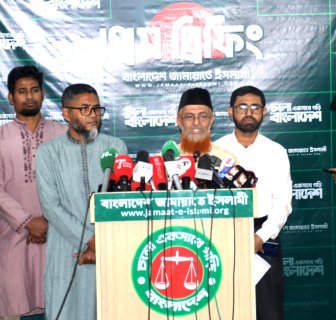


Bangladesh Jamaat-e-Islami has accused the government of showing bias in appointing administrators to city corporations, district councils, and replacing vice-chancellors at public universities, criticizing the process as disrupting democratic continuity. The claims were made by Maulana Abdul Halim, Assistant Secretary General of Jamaat, during a press briefing at the party’s central office in Dhaka’s Moghbazar today.
Abdul Halim highlighted that instead of selecting representatives through popular votes, the government has been appointing administrators based on political affiliations, sidelining public opinion in the local governance structure. He called for prompt local government elections to be conducted and responsibilities to be handed over to elected officials.
The Jamaat leader expressed disappointment that local government polls were not promptly organized following the national election, insinuating that the government’s appointment of administrators was a strategic move to benefit itself.
In addition, Abdul Halim criticized the government’s decisions regarding district council appointments, citing that political considerations influenced the recent appointments to 42 district councils. He also voiced concerns about the appointments of individuals with political ties to key academic positions in the higher education sector, emphasizing the importance of merit-based recruitment.
During the press conference, Abdul Halim also mentioned the change in the Bangladesh Bank governor. When questioned about the government’s actions potentially indicating authoritarian tendencies, he stated that Jamaat refrained from making strong accusations at this time, preferring to raise objections as a responsible opposition party. However, he cautioned that further actions might be taken if their demands were not addressed.