
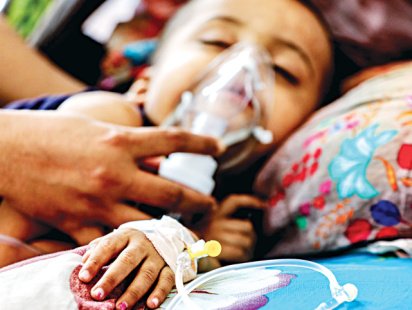


Amid a concerning surge in measles cases in Bangladesh, health professionals are stressing the importance of vaccination and early symptom recognition for parents and communities. Dr Syed Abu Sayeed, an emergency medical officer working with the International Organisation for Migration (IOM), highlighted the reasons behind the outbreak, how to detect measles, and measures to curb its transmission.
Dr Sayeed explained that the resurgence of measles is not abrupt but stems from various underlying factors, notably a drop in vaccination rates. Bangladesh adheres to the Expanded Programme on Immunisation (EPI), where children are administered two doses of the measles-rubella vaccine, MR1 and MR2.
In 2024, MR1 coverage stood at an impressive 96.61%, with MR2 coverage at 96.15%. However, these figures dipped to 92.73% and 90.78% by 2025. Dr Sayeed emphasized that even a slight decrease is significant for a highly contagious disease like measles.
He underscored that maintaining a vaccination coverage of at least 95% is crucial for herd immunity against measles. Malnutrition exacerbates the situation by compromising children’s immune systems, rendering them more susceptible to infections.
Early detection of measles symptoms is paramount. Dr Sayeed outlined the initial signs as a fever lasting one to three days, often accompanied by coryza. By the fourth day, a distinct rash appears, starting on the face and spreading throughout the body.
Differentiating measles from other illnesses such as flu or chickenpox is vital. Measles presents with a delayed rash onset, escalating fever post-rash emergence, and potential complications like pneumonia and encephalitis. The virus spreads rapidly through respiratory droplets, remaining active in the air or on surfaces for up to two hours.
Children aged nine months to two years are particularly vulnerable, with gaps in vaccination coverage contributing to increased infections in this group. Dr Sayeed reiterated that robust vaccination coverage is pivotal to preventing outbreaks.
In case of suspected measles, immediate isolation is necessary to contain transmission. Close symptom monitoring is essential, with hospitalization mandated for severe issues. Treatment focuses on supportive care, hydration, nutrition, and surveillance for complications like pneumonia.
Emphasizing prevention, Dr Sayeed stressed timely vaccination, good nutrition, and recommended vitamin A supplements to bolster immunity. Heightened awareness and vaccination adherence are vital in combatting measles in Bangladesh.
Swift parental action can significantly impact the outcome, differentiating between a mild illness and severe complications.