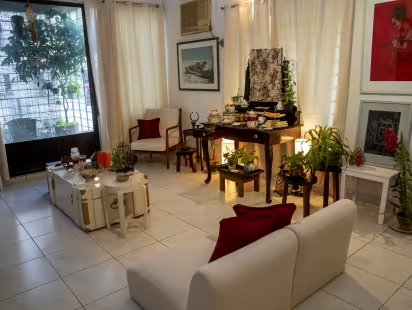
You’ve cleaned, polished, and organized every corner, yet the area still feels cluttered. The issue often lies not in the mess itself but in subtle design pitfalls that undermine your room’s appeal.
A tastefully decorated home does not necessarily require high-end furnishings or intricate decor items. At times, despite significant effort, a space may still appear disorganized or visually chaotic. Frequently, the challenge is not due to insufficient decor but rather an excess of it placed incorrectly.
While each of these elements may appear insignificant on its own, collectively they can influence the overall aesthetic of a home. Effective decor is more about understanding what complements each other than merely adding more items.
Here are five frequent decorating errors to steer clear of in order to maintain a balanced, orderly, and welcoming atmosphere in your home.
Lighting is crucial to the ambiance and appearance of a room, yet it is frequently neglected during the decorating process.
Relying on a single overhead light can quickly render a room flat and unwelcoming. Poorly positioned lighting can cast shadows in certain areas while leaving others overly bright.
Rather than relying on just one source, think about layering various types of lighting, including ceiling fixtures, wall sconces, table lamps, and floor lamps.
Begin by incorporating at least two different lighting sources at varying heights. This approach fosters a more balanced light distribution while adding depth and warmth to the environment.
The temperature of the bulbs also plays a role. Combining warm and cool lights within the same room can create a disjointed visual effect, so aim for consistency in color temperature across all lighting fixtures.
Selecting a paint color based solely on its appearance in a brochure or on a screen can lead to misunderstandings. A hue that seems muted in a picture might look entirely different when applied to a full wall. Factors such as natural light, artificial sources, flooring, and even existing furniture can affect how a color is perceived in a room.
Before finalizing a color choice, apply a sample directly on the wall and observe how it appears at different times during the day. This practice helps to prevent any unpleasant surprises and ensures that the chosen color harmonizes with the rest of the decor.
A frequent decorating blunder is viewing every open surface as a chance to showcase something. When each shelf is adorned with plants, every table features a centerpiece, and every wall is filled with frames, the eye has no place to settle. Even with careful organization, an overabundance of items can generate visual clutter.
Instead, choose selectively what you want to display and allow certain surfaces and shelves to remain relatively uncluttered. Utilize trays, baskets, and storage containers to keep smaller items organized, grouping decorative objects thoughtfully rather than scattering them across all available spaces.
Arranging sofas, chairs, and other furnishings against the walls might seem like an effective method to create a more spacious feel. However, this setup can sometimes produce the opposite effect, leaving the center of the room awkwardly bare and rendering the overall layout disjointed. It may also disrupt natural conversation flow and movement, particularly in living areas.
Shifting furniture slightly inward can create a more inviting atmosphere, allowing the seating area to feel more purposeful. The goal is to establish a conversation zone where chairs and sofas face each other, rather than positioning guests around the room’s perimeter. Even a minor adjustment can lead to a more harmonious layout and make the space seem more intentionally arranged.
Hanging artwork too close to the ceiling or too high above furniture is another common error that can lead to a room appearing visually unbalanced. When paintings, photographs, or frames are placed too high, they may seem disconnected from the furniture and other elements beneath them. This can also lead to walls feeling oddly bare, despite the presence of decorative items.
Instead, position artwork at eye level; this enhances engagement with the pieces. When placing art above furniture, ensure the bottom of the frame is approximately six to ten inches above the surface, allowing for a cohesive visual relationship between the two. A larger gap can make both the art and the furniture appear as if they are floating separately.
Scale is also a crucial factor. A small frame over a large sofa can seem lost, while an oversized piece can overwhelm a narrow wall. For a gallery wall, consider the collection as a unified composition rather than hanging each frame individually, and maintain consistent spacing throughout.
Photo: LS Archives