
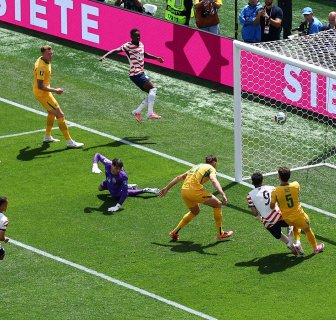


The standout moment in Saturday’s intense matchup between the USA and Australia wasn’t a goal-scoring feat by a top striker, but rather a haunting scene of a towering defender caught off guard. The Socceroos’ defense crumbled under pressure in the 11th minute, as a swift low delivery caught Cameron Burgess off balance, resulting in an own goal that paved the way for a comfortable 2-0 victory for the hosts.
This marked a significant milestone for the USA, becoming the first men’s World Cup team to benefit from own goals in consecutive games, following Damian Bobadilla’s mishap in Paraguay’s recent 4-1 loss.
The incident also highlighted an intriguing trend in the tournament.
While top strikers came to North America eyeing the Golden Boot, they find themselves overshadowed by an unexpected trend. The 2026 World Cup has already seen seven own goals, a stark contrast to the five in the entire 2022 event in Qatar.
Far from random mistakes, this surge in defensive blunders is a direct result of modern offensive strategies.
The USA’s memorable moments both stemmed from a similar game plan: rapid attacks down the wings, reaching the goal line, and delivering fast, low crosses into the six-yard box.
Traditionally, wingers preferred swinging crosses from afar. However, the focus now is on causing chaos in the “corridor of uncertainty.” By driving the ball hard across the goalmouth, defenders are forced to sprint back towards their own goal. At such speed, even a slight touch or an unfortunate bounce can lead to a deflection past the goalkeeper.
This was evident when Egypt’s Mohamed Hany accidentally redirected Belgium’s equalizer under pressure, and when Qatar’s Mohamed Manai made a panicked error against Canada. Even Iraq’s top striker, Aymen Hussein, fell victim to the chaos, inadvertently guiding a cross into his own net against Norway.
In the age of analytics-driven football, where teams meticulously craft attacks to create high-value opportunities, these mistakes are not purely coincidental. They are strategically induced.