
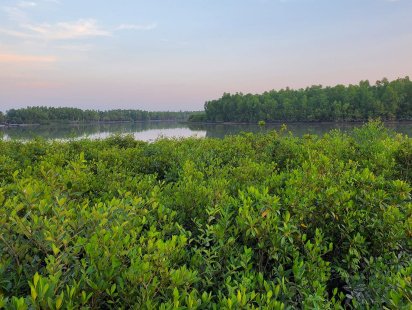


The recent government announcement to explore opportunities in carbon markets marks a significant shift in Bangladesh’s involvement in global climate finance. This development is crucial as the decisions made now will determine how the country’s natural assets, including forests, wetlands, and coastal ecosystems, will contribute to national development in the coming decades.
Carbon markets are rapidly expanding as governments and businesses seek to reduce greenhouse gas emissions and fund climate initiatives. For Bangladesh, these markets present potential avenues for investment in mangrove restoration, renewable energy, climate-resilient agriculture, sustainable land management, and other projects that boost resilience and economic growth. They also offer prospects for technology transfer, job creation, and enhancing the country’s ability to monitor and manage emissions.
While these opportunities are promising, it is essential to recognize that carbon markets are not a one-size-fits-all solution. International experiences emphasize that the success of such markets hinges on effective governance rather than merely the market mechanisms. Transparent institutions, reliable monitoring systems, and equitable benefit-sharing arrangements are crucial for achieving positive environmental and development outcomes.
Therefore, Bangladesh should approach carbon markets with caution and foresight. The country’s natural capital, encompassing the Sundarbans, mangroves, rivers, wetlands, and agricultural areas, provides a wide array of benefits beyond carbon storage. These ecosystems play vital roles in protecting communities from natural disasters, preserving biodiversity, supporting food production, and sustaining livelihoods.
In negotiating partnerships in the carbon market realm, Bangladesh should prioritize agreements that enhance national development rather than solely focusing on generating carbon credits. Emphasizing technology transfer, building local expertise, strengthening institutions, and ensuring equitable distribution of benefits within the country are key considerations. The objective should not be maximizing carbon transactions but maximizing overall national value.
It is crucial for the government to conduct transparent assessments of carbon market proposals, taking into account factors such as financial returns, national sovereignty, environmental impact, food security, livelihoods, and benefit sharing. Transparency in project selection, contracting, and revenue management is essential to maintain public trust and ensure lasting benefits from climate finance initiatives.
Furthermore, recognizing the role of local communities, including farmers, fisherfolk, and forest-dependent groups, is vital in the success of carbon market projects. Their knowledge, rights, and contributions should be acknowledged and integrated into project designs to enhance environmental outcomes and public trust.
Bangladesh should also continue advocating for emission reductions at the source and fulfilling commitments on climate finance, adaptation, and loss and damage, alongside exploring carbon market opportunities. The country’s leadership in climate adaptation and possession of globally significant ecosystems provide leverage in shaping how national assets are valued and utilized in alignment with long-term development priorities.
Ultimately, the success of carbon market initiatives in Bangladesh should be measured by their impact on ecosystem resilience, livelihood improvement, institutional strengthening, and overall national resilience. Carbon markets should be viewed as a component of a comprehensive national development strategy, rather than a standalone strategy.
Farah Kabir, the country director at ActionAid Bangladesh, shared these insights.
REWRITE_BLOCKED: The content is too long to be rewritten within the given constraints effectively.