
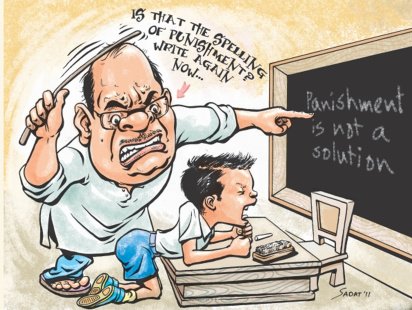


A recent report from the Multiple Indicator Cluster Survey (MICS) 2025, conducted by the Bangladesh Bureau of Statistics (BBS) and UNICEF, has unveiled a concerning reality. The findings indicate that a staggering 86 percent of children aged 1–14 in Bangladesh experienced physical punishment in the month leading up to the survey. This high prevalence of physical punishment among children is not a minor issue but rather a significant national crisis.
Despite the Ministry of Education’s ban on corporal punishment in educational institutions through a circular in 2011, children are still being subjected to physical abuse by teachers. This form of punishment extends beyond schools and persists in homes, institutions, and workplaces with minimal accountability. While occasional media reports shed light on shocking incidents of violence against child domestic workers and students, the majority of abuse remains undisclosed. Corporal punishment encompasses more than just physical injuries; it also includes humiliation, verbal abuse, threats, intimidation, and ridicule, leaving lasting emotional scars.
The normalization of corporal punishment in society highlights how violence has become ingrained in child-rearing practices. This acceptance of violence reinforces the subordinate status of children in society and sets the stage for further forms of abuse.
Research, such as the 2021 report titled “Corporal Punishment of Children: Summary of Research on Its Impact and Associations” by the Global Partnership to End Violence Against Children, has reviewed over 300 studies linking corporal punishment to various negative outcomes. Notably, none of the studies identified any benefits associated with corporal punishment. It has been shown that this disciplinary method is ineffective, as children comply out of fear rather than learning from their punishment.
Furthermore, a report titled “Corporal Punishment of Children: the public health impact,” published by the World Health Organization in 2025, revealed that over half of children under 18 globally experience corporal punishment annually. Data from 58 countries indicated that 17 percent of children subjected to corporal punishment faced severe forms of abuse, such as being hit on sensitive areas or repeatedly. Studies across 49 low and middle-income countries demonstrated that children exposed to corporal punishment were 24 percent less likely to be developmentally on track compared to their peers.
The detrimental effects of corporal punishment extend beyond immediate physical harm, triggering hormonal stress responses that can lead to long-term mental health issues, including anxiety, depression, low self-esteem, and increased risks of antisocial behavior or substance abuse in adulthood. This underscores the profound and enduring impact of what is often perceived as discipline.
International human rights standards unequivocally affirm that all forms of corporal punishment must be prohibited and eradicated in all settings, including homes, schools, institutions, and the justice system. While approximately 70 countries have already banned corporal punishment in all settings, Bangladesh lags behind in enacting such legislation. This legal gap highlights a discriminatory practice where hitting an adult is punishable, but hitting a child is tolerated, denying children equal protection under the law.
The argument that “I was hit as a child, and I turned out fine” fails to address the harmful nature of corporal punishment. Resilience should not be used to justify harm, as many people survive negative experiences, which does not make them acceptable or beneficial. Instead, there is a need to provide parents and teachers with support and resources to learn constructive, non-violent methods of guiding children’s behavior.
Leadership plays a crucial role in shifting societal attitudes towards corporal punishment. Countries like Sweden, Finland, Germany, New Zealand, Poland, and Romania have seen a decline in public acceptance of corporal punishment following legislative action. By enacting laws, promoting positive parenting, changing social norms, and ending violent discipline in schools, it is possible to transform societal attitudes and behaviors.
The prohibition of corporal punishment is not about criminalizing parents but rather about safeguarding children and changing societal norms. Evidence from countries with bans on corporal punishment shows that these laws serve as educational tools, fostering healthier and non-violent relationships between adults and children without leading to a surge in prosecutions.
In line with the commitment to SDG target 16.2, which aims to end all forms of violence against children by 2030, Bangladesh must take proactive measures to protect children from violence. This includes enacting comprehensive legislation banning corporal punishment in all settings, reinforcing the enforcement of existing bans in educational institutions, promoting positive parenting practices, enhancing awareness campaigns, and empowering parents, teachers, and service providers to interact with children without resorting to violence.
Ending corporal punishment is not only about protecting children but also about nurturing a society founded on dignity, respect, and non-violence. It is imperative for the new government to lead by example through legal reforms that facilitate social transformation and create a peaceful environment for children.