
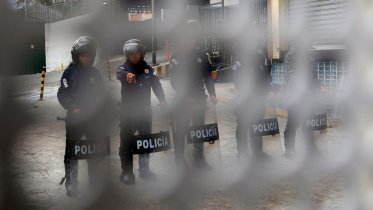


More than 200 Venezuelan political prisoners initiated a hunger strike on Sunday in a bid to secure their release under a recently passed amnesty law that excludes a significant number of them.
The inmates at Rodeo I prison, located approximately 40 kilometers east of the capital Caracas, vocally expressed their demands to their loved ones as part of the protest, witnessed by an AFP journalist. Cries of “Freedom!”, “release us all!”, and “Rodeo I on strike” resonated from within the facility.
Venezuela’s congress sanctioned the amnesty law on Thursday as part of a series of reforms influenced by the United States following the ousting and capture of former president Nicolas Maduro on January 3. The hunger strike, which commenced on Friday night, was triggered by inmates’ grievances that they would not benefit from the law due to its exclusion of cases involving the military, which are prevalent at that particular facility.
Yalitza Garcia, the mother-in-law of a prisoner named Nahuel Agustin Gallo, disclosed that approximately 214 individuals, comprising Venezuelans and foreigners, are participating in the hunger strike. Gallo, an Argentine police officer facing terrorism charges, falls under one of the excluded categories.
Shakira Ibarreto, the daughter of a policeman arrested in 2024, remarked, “They decided Friday to go on hunger strike because of the scope of the amnesty law, which excludes many of them.”
On Sunday, a team from the International Committee of the Red Cross (ICRC) visited Rodeo I prison for the first time. Filippo Gatti, the ICRC’s health coordinator for Venezuela, informed family members that this visit marked a positive step forward.
Criticism has emerged regarding the amnesty law, which was spearheaded by interim leader Delcy Rodriguez under pressure from Washington following the US military operation in Venezuela on January 3, resulting in the apprehension of Maduro and his wife on drug trafficking charges.
Opposition figures have raised concerns about the legislation, highlighting provisions that seem to safeguard certain offenses previously exploited by authorities to target Maduro’s political adversaries. The law also excludes security force members convicted of terrorism-related activities as defined by the government.
Despite its drawbacks, the amnesty law grants relief to 11,000 political prisoners who were either paroled or placed under house arrest in the past three decades. The head of Venezuela’s legislature disclosed that over 1,500 political prisoners have already sought amnesty under the new law, with many others released prior to its approval.
On Sunday, a few inmates were freed from Rodeo I, holding release documents as they exited the prison, eliciting applause. Among the released prisoners, Robin Colina joyfully communicated with loved ones over the phone, expressing his relief. Armando Fusil, a 55-year-old police commissioner from the state of Maracaibo, who was detained in October 2024 without justification, highlighted the unity among detainees in their shared pursuit for freedom.
The NGO Foro Penal, dedicated to defending political prisoners, reported 23 releases on Sunday. Maduro, who governed Venezuela from March 2013 to January 2026, subjected opposition members and activists to severe repression during his tenure. Currently in US custody awaiting trial on drug trafficking charges, Maduro maintains his innocence and asserts his status as a prisoner of war.