
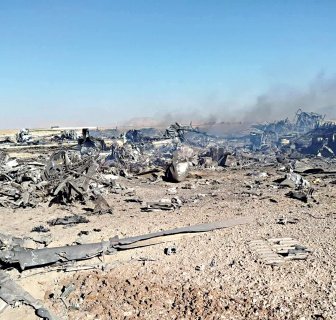


President Donald Trump announced the successful extraction of a second airman from Iran, describing it as a bold Search and Rescue Operation. Iran claimed to have thwarted the rescue attempt and shared images of aircraft wreckage but did not confirm if the US serviceman was captured. In response, Trump threatened to target Iran’s power plants and bridges if the vital Strait of Hormuz was not reopened.
The conflict, initiated by US-Israeli strikes on Iran in late February, has impacted the Middle East and global economy. Iran’s blockade of the Strait of Hormuz, a crucial oil trade route, and attacks on neighboring countries have escalated tensions. Trump demanded Iran to cease obstructing the strait, using strong language in a social media post.
As diplomatic efforts were made to ease tensions in the region, Trump revealed that the rescued airman had been in a perilous situation behind enemy lines in Iran. The airman, equipped with necessary tools for communication and survival, was safely evacuated by US forces after facing challenges during the operation. Iran reported destroying military transport planes and helicopters involved in the rescue mission.
Amidst the ongoing conflict, Iran continued to target critical infrastructure in Gulf countries and launched attacks on US diplomatic sites in Iraq. The situation worsened as Israel retaliated against Hezbollah attacks in Lebanon, resulting in civilian casualties. The conflict has disrupted Easter Sunday celebrations for Christian minorities in the region, with heightened security measures in place.
In a separate incident, a strike near Iran’s Bushehr nuclear plant raised concerns about potential radioactive fallout affecting nearby Gulf capitals. The International Atomic Energy Agency expressed deep concern over repeated attacks on the plant. Iran faced criticism for its internet blackout and ongoing crackdown following anti-government protests, with reports of executions and prolonged internet restrictions.