
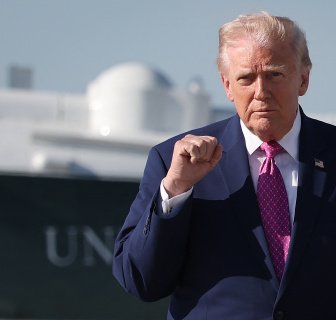


US President Donald Trump revealed yesterday that Lebanon and Israel had reached a 10-day ceasefire agreement, hinting at a potential upcoming meeting between the United States and Iran during the weekend. This development has sparked hope that the Iran conflict may be approaching a resolution. However, it remained uncertain whether the Iran-backed Hezbollah group was fully on board with the agreement.
In the meantime, a prominent Pakistani mediator indicated that US and Iranian officials were making significant progress on resolving contentious issues. Despite this positive momentum, Iran emphasized that the status of its nuclear program remained unresolved.
Sources close to the matter reported that US and Iranian negotiators had adjusted their expectations for a comprehensive peace deal and were now aiming for a temporary memorandum to prevent a resurgence of hostilities. A senior Iranian official noted that the two sides had begun to bridge some gaps, particularly regarding the management of the Strait of Hormuz.
Both the United States and Pakistan have been optimistic about reaching a resolution in the ongoing conflict, with President Trump expressing confidence in the negotiations. He mentioned that Iran had offered to refrain from possessing nuclear weapons for over two decades, indicating progress in the discussions.
The closure of the strategic strait had led to a significant oil price shock and prompted concerns about a global economic downturn. Efforts to mediate the conflict were underway, with Pakistan’s military leader engaging in talks in Tehran to prevent a potential escalation of tensions.
The possibility of a ceasefire in Lebanon, where Israel was engaged in conflict with Hezbollah, was deemed crucial for peace discussions. President Trump lauded the agreement between Israel and Lebanon, expressing his commitment to achieving lasting peace in the region through the ceasefire.
Trump also announced plans to invite the leaders of Israel and Lebanon to the White House to further solidify the peace process. However, clashes continued in southern Lebanon, with reports of casualties from Israeli airstrikes.
The negotiations between the US and Iran centered on Iran’s nuclear aspirations, with proposals for suspending nuclear activities for varying durations. Iran sought concessions such as the unfreezing of funds in exchange for allowing increased ship traffic through the strait.
If a memorandum to halt hostilities is reached, a 60-day period is anticipated for finalizing a comprehensive agreement, involving expert consultations and oversight from the International Atomic Energy Agency (IAEA). The issue of Iran’s uranium stockpile, enriched to high levels, remained a point of contention, with discussions ongoing regarding a potential compromise.
As the talks progressed, the US expanded its blockade on Iranian shipping to include a range of contraband items. The US Navy issued a warning that vessels attempting to reach Iranian territory would be subject to inspection and potential seizure. Chairman of the Joint Chiefs of Staff, Dan Caine, confirmed that the military had not yet intercepted any ships but noted that a significant number had altered their course.