
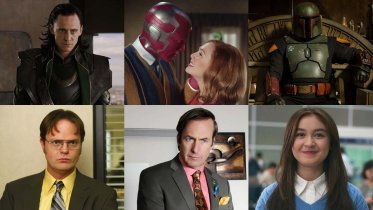


Supporting characters in the realm of film and television have typically served specific roles in the narrative, such as aiding the protagonist, providing comic relief, and advancing the plot. However, there has been a noticeable shift in recent times, especially in the current entertainment landscape dominated by sprawling franchises and long-form streaming series.
Increasingly, supporting characters are taking on more prominent roles and becoming the focal points of entirely new storylines. Rather than stories revolving solely around a single protagonist, audiences are now being drawn into fictional universes where multiple characters can capture their attention. When a particular character resonates strongly with viewers, studios are willing to restructure the storytelling around them.
A prime example of this phenomenon can be seen in Hollywood’s franchise era, particularly within the Marvel Cinematic Universe. Characters like Loki, who started as secondary figures, have evolved into central figures driving their own narratives. For instance, Loki transitioned from a secondary antagonist in “Thor” to a captivating personality with his own Disney+ series, thanks to Tom Hiddleston’s compelling portrayal.
The trend extends to other Marvel properties like Wanda Maximoff and Vision, who were initially supporting characters in the “Avengers” films but later became the focus of the innovative series “WandaVision.” Similarly, in the “Star Wars” universe, characters like Boba Fett, who had limited screen time in the original trilogy, now have their own series, such as “The Book of Boba Fett.”
A standout example of this shift is seen in Grogu, famously known as Baby Yoda, in “The Mandalorian.” Initially introduced as a companion character, Grogu quickly became a fan favorite and reshaped the show’s narrative trajectory. The emergence of supporting characters as central figures has reshaped how franchises are perceived in this new era of entertainment.
Streaming platforms have played a pivotal role in facilitating this change by allowing characters to be further developed in spin-off series without overshadowing the original storyline. This model has also influenced non-franchise television series, where supporting characters like Dwight Schrute in “The Office” and Sheldon Cooper in “Young Sheldon” have transitioned from the sidelines to the forefront of the narrative.
The rise of supporting characters reflects a shift in audience engagement, with viewers delving deeper into fictional worlds and forming connections with secondary characters. Social media has accelerated this process, turning brief but impactful character moments into viral sensations that drive interest and demand for expanded narratives.
For instance, Netflix’s “XO, Kitty” emerged as a spin-off due to the audience’s strong response to Kitty Song Covey in the “To All the Boys I’ve Loved Before” films. Similarly, “The Boys” universe has expanded horizontally with spin-offs like “Gen V,” showcasing new characters within the established narrative framework.
This shift is driven by both creative and commercial motives, as supporting characters offer untapped narrative potential and come with pre-existing audience attachment. In the streaming era, the background is no longer a static space but a fertile ground for new storytelling possibilities, with supporting characters taking center stage in reshaping the entertainment landscape.