
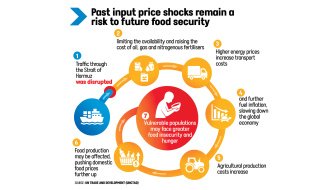


The recent reopening of the Strait of Hormuz, which was closed for over 100 days, may not provide immediate relief to the Least Developed Countries (LDCs) and other vulnerable economies facing challenges from oil and food price fluctuations, according to a recent analysis by the UN Conference on Trade and Development (UNCTAD).
In a report issued yesterday, UNCTAD highlighted that while the reopening of the critical maritime passage in the Gulf is a positive development for 61 nations, including 35 LDCs, it may present a longer and costly recovery path for vulnerable economies.
For instance, Bangladesh heavily relies on oil and gas imports, with 95% of its oil demand and 30% of its gas needs being met through imports from Middle Eastern countries like Saudi Arabia and Qatar.
The report revealed a substantial drop in daily ship transits through the Strait of Hormuz from over 100 to less than 50 after the closure due to the US-Israel conflict with Iran. Ship traffic began to recover following a recent agreement between the United States and Iran, easing tensions and stabilizing energy markets.
Despite the positive outlook for energy markets, the report emphasized that some sectors, such as transportation, may experience prolonged adjustments in prices. The prolonged shipping disruptions during the closure period had already caused adverse effects on the global economy, particularly impacting vulnerable economies with oil and fertilizer price shocks leading to inflation.
The UNCTAD report warned that rising prices of oil, gas, and fertilizers could escalate agricultural production costs, potentially affecting food production and leading to higher domestic food prices. This situation could heighten food insecurity and malnutrition risks, especially for vulnerable populations in LDCs.
Furthermore, the report stressed that even a slight increase in real food prices could significantly impact child malnutrition rates. It noted that food prices had surged in LDCs during the conflict and might continue to rise post-crisis. Adjusting to the impact of energy shocks could be challenging for vulnerable economies, especially those heavily reliant on oil imports, as they may face significant inflationary pressures.
UNCTAD underscored the importance of international assistance for these vulnerable economies, cautioning that reduced development aid and escalating debt servicing obligations could impede the recovery process.