
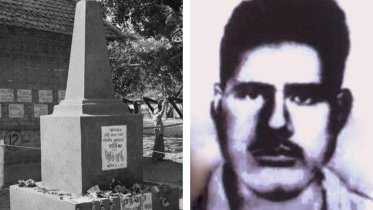


The first Shaheed Minar in Dhaka, a symbol of sacrifice and resilience during the Language Movement of 1952, owes its existence to the bravery and generosity of Pearu Sardar, a revered figure from Old Dhaka. Renowned poet Syed Shamsul Haque immortalized Pearu Sardar in his work “Pearu Sardar Shorone,” depicting him as a champion of the cause.
Historical accounts from “Prothom Shaheed Minar O Pearu Sardar” and Anisuzzaman’s essay shed light on the pivotal role played by Pearu Sardar in the construction of the iconic Shaheed Minar. Following the tragic events of February 21, 1952, when language activists were martyred, students from Dhaka Medical College took it upon themselves to build a memorial. Despite facing curfews and military presence in the streets, the students were determined to honor the fallen heroes.
Facing challenges in sourcing construction materials due to the prevailing circumstances, the students turned to Pearu Sardar for help. As a prominent community leader and contractor, Pearu Sardar not only provided the necessary materials but also arranged for skilled labor to assist in building the monument. Under the cover of darkness on February 23, 1952, the first Shaheed Minar took shape on the premises of Dhaka Medical College, a testament to the unity and determination of the students.
Pearu Sardar’s contributions extended beyond the construction of the Shaheed Minar. His neighborhood became a sanctuary for fleeing students during turbulent times, offering protection and support. Despite the risks involved, Pearu Sardar continued to support the cause of education and philanthropy in Old Dhaka, leaving a lasting legacy of service and sacrifice.
Even after his passing in 1961, Pearu Sardar’s impact on the Language Movement was commemorated by the government of Bangladesh, which posthumously awarded him the prestigious Ekushey Padak. His family, led by his grandson Mahbubur Rashid, takes pride in his legacy and hopes to continue his philanthropic endeavors in his honor.
The story of Pearu Sardar and the first Shaheed Minar stands as a testament to the spirit of unity and resilience that defined the Language Movement, inspiring future generations to uphold the values of freedom and cultural identity.