


In the early 1960s, a young boy, around nine or ten years old, would often be seen engrossed in newspapers and magazines, captivated by the images of famous personalities. His deep fascination led him to frequently cut out these portraits, much to the dismay of his father who was still reading the morning news.
This childhood interest marked the beginning of Nasir Ali Mamun’s journey, which would later reshape the visual representation of a nation.
As a teenager, Mamun started noticing a stark contrast between the real-life appearance of people and how they were portrayed in photographs. In Bangladesh during that era, studio portraits dominated the scene, but the heavy-handed techniques used often resulted in unrecognizable images. These methods involved altering facial features and using substances like alta directly on negatives to mask imperfections, which Mamun found inauthentic.
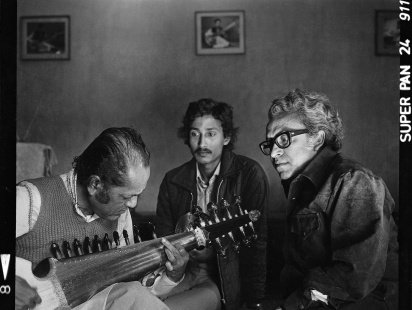
In 1971, Mamun, through persistence and social skills, borrowed a camera from Studio Nehar in Dhaka to kickstart his photographic endeavors. This modest beginning paved the way for a five-decade-long revolution in visual culture. Throughout his career, Mamun has been dedicated to capturing the essence of intellectuals, visionaries, and poets who shaped Bangladesh, presenting them as authentic representations of their time rather than staged subjects.
Reflecting on his motivation to transform portrait photography in Bangladesh, Mamun expressed, “I aimed to portray people as they truly are, shifting away from artificial images towards authenticity and honesty.”
While color film became prevalent by the late 1980s, Mamun remained loyal to black-and-white photography, finding it to be his preferred mode of expression despite the world’s vibrant hues. This commitment to honesty earned him accolades from renowned figures he photographed, with poet Shamsur Rahman calling him the “Poet of the Camera” and others recognizing his mastery of light and shadow.
Mamun’s lens extended beyond national boundaries, capturing a diverse range of global personalities through his camera and intimate conversations. Alongside his iconic photography, he documented international figures through audio and video interviews, a collection that has remained largely unseen until now.
His illustrious career has been adorned with prestigious awards, including the Shilpakala Padak in 2018, the Chobi Mela Lifetime Achievement Award in 2017, and a Bangla Academy Honorary Fellowship in 2022. The Ekushey Padak he received last year marked a significant milestone in his journey.
Now in his seventies, Mamun focuses on preserving his vast archive, which includes unpublished interviews, letters, and notes from icons worldwide. His vision for a “Photoseum,” revealed during his recent exhibition at Burdwan House, Bangla Academy, aims to continue educating future generations through his work.
Encouraging young artists to find beauty in the ordinary, Mamun advises them to imbue life into everyday objects, believing that sustained documentation of mundane moments will lead to unique and impactful art. He emphasizes that understanding the complexities of human nature is crucial for creating a profound connection through art, as “people relate to people.”
[Photo: Photosium]