
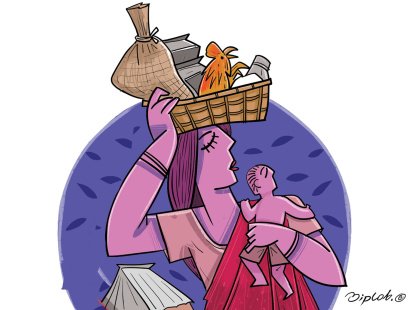


Women in Korail are expressing their struggles with managing multiple responsibilities without feeling heard. Despite engaging in various economic activities like stitching, poultry business, and skills training, they are overwhelmed with unpaid domestic and care work. A recent Time-Use Survey in Bangladesh highlighted that women spend significantly more time on unpaid household chores compared to men, amounting to a substantial economic contribution.
While efforts are made to boost women’s economic empowerment, the reality is that women face immense pressure to juggle multiple income-generating activities alongside their existing responsibilities. The expectation for women to diversify their income often leads to added workload without considering the toll on their well-being.
The concept of “depletion” introduced by Shirin Rai sheds light on the consequences of overwhelming women with tasks beyond their capacity, depleting their physical, mental, and social resources. It is crucial to shift the focus from just measuring women’s economic participation to understanding the sacrifices they make, such as sleep, rest, time with family, and personal well-being.
As Bangladesh advances its care agenda with initiatives like modern daycare centers, it is essential to integrate care responsibilities into livelihood programs. Programs should not only assess attendance and income but also consider the impact on women’s time, care duties, and overall burden. Redistributing unpaid care and ensuring sustainable support for women’s additional workload are vital steps towards promoting gender-responsive development.
Therefore, a holistic approach to women’s economic activities should prioritize the well-being of women by evaluating the trade-offs when adding to their workload. It is crucial to recognize that women’s time is limited and empowering activities should not lead to exhaustion but rather support their overall welfare.
Tasmiah T Rahman, a portfolio adviser at Innovision Consulting and a joint PhD candidate in women’s labor market participation, emphasizes the importance of reevaluating the demands placed on women and ensuring that development programs consider the existing burdens women face in their daily lives.