
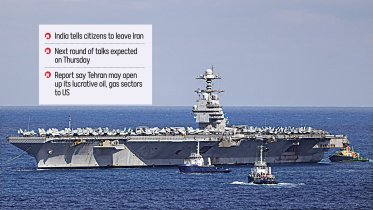


Iran warned the United States that any form of attack would trigger a strong response, in reaction to President Trump’s consideration of limited strikes against the country. The U.S. has increased its military presence in the Middle East to pressure Iran into reaching a deal at upcoming negotiations. Iran’s foreign ministry stated that any attack, even if limited, would be seen as aggression and met with fierce self-defense. The two countries recently held indirect talks in Switzerland and are set to continue discussions this week.
The European Union emphasized the need for a diplomatic resolution to avoid further conflict in the region. Iran, facing internal and external challenges, is focused solely on discussing its nuclear program during the mediated talks. Reports suggest that Iran is willing to make concessions on its nuclear activities in exchange for sanctions relief and acknowledgment of its right to enrich uranium. This move aims to prevent a potential U.S. military strike.
Tehran is open to negotiating the transfer of enriched uranium abroad, dilution of remaining stock, and participation in a regional enrichment consortium. Iran also proposed opportunities for U.S. companies to invest in its oil and gas sectors as part of the negotiations. Foreign countries, including India, have advised their citizens to leave Iran amid escalating tensions. Despite U.S. military deployments, Iran remains steadfast in its stance, emphasizing its historical resilience against external pressures. Student protests continue in Iranian universities, leading to clashes as the situation unfolds.