
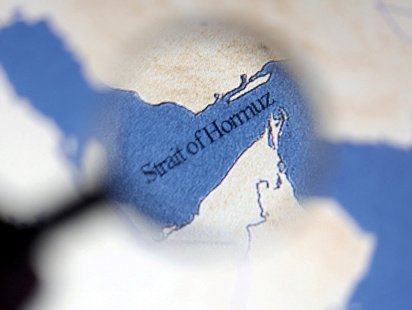


Iran’s military announced the closure of the Strait of Hormuz once again on Saturday, shortly after reopening it, as more than a dozen commercial vessels navigated through the crucial waterway. This back-and-forth regarding the strait raised doubts about US President Donald Trump’s positive outlook the previous day, suggesting that a peace agreement to end the conflict between the US, Israel, and Iran was near.
On Friday, Tehran had declared the strait open following a ceasefire in Lebanon to halt the hostilities between Israel and Hezbollah. This declaration initially caused excitement in global markets and led to a drop in oil prices. However, President Trump maintained that a US naval blockade of Iranian ports would persist until a deal was reached, prompting Iran to threaten to close the strait again.
Later on Saturday morning, Iranian state TV, citing a statement from military central command, reported that the control of the Strait of Hormuz had reverted to its previous state under strict armed forces management, blaming the ongoing US blockade. Meanwhile, several ships were observed passing through the strait, adhering to Iranian instructions and some identifying themselves as Indian or Chinese to demonstrate neutrality.
Despite several ships transiting the strait in both directions by 0900 GMT on Saturday, at least two tankers heading eastwards from the Gulf towards India changed course and abandoned their journeys. With only four days left until the end of the two-week ceasefire in the conflict initiated on February 28, President Trump remained optimistic about a potential resolution.
Pakistan played a significant role as a mediator in the peace talks, with its military chief concluding a visit to Iran and its Prime Minister engaging with other regional players. Talks are set to continue in Pakistan, aiming to end the conflict that began with US and Israeli attacks on Iran. Both sides suffered casualties, leading to wider regional implications with Iran targeting US interests and Hezbollah involving Lebanon in the conflict.
While the two-week ceasefire appeared stable, unresolved issues such as Iran’s enriched uranium stockpile and the future of the Strait of Hormuz remained contentious. President Trump expressed confidence in reaching a deal, mentioning an agreement on Iran surrendering its enriched uranium. However, Iran refuted these claims, stating that the transfer of enriched uranium to the US was not part of the negotiations.
As the conflict persisted, ordinary Iranians continued to face internet restrictions, with reports indicating a 50-day blackout since the war’s onset.