
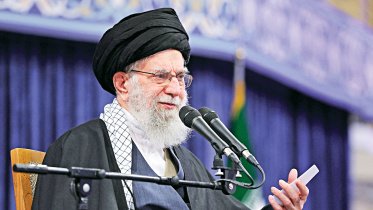


Iran conducted retaliatory strikes across the Gulf in response to the assassination of Ayatollah Ali Khamenei, the supreme leader, despite warnings from President Donald Trump of severe repercussions. Israel also launched attacks on Tehran with the aim of asserting air superiority.
The military actions by the US, Israel, and Iran had far-reaching consequences, impacting various sectors such as shipping, air travel, and oil trade. Concerns over escalating energy costs and disruptions to business in the strategic Gulf region were raised.
Iranian President Masoud Pezeshkian condemned Khamenei’s killing as an act of war against Muslims and vowed to avenge the perpetrators. Israel viewed the incident as a starting point and boasted of eliminating senior commanders, including Khamenei, in a coordinated operation.
President Trump confirmed the deaths of 48 Iranian leaders in the ongoing US-Israeli bombardments. In response to Khamenei’s death, Iran’s leadership council temporarily assumed the supreme leader’s responsibilities.
Tensions escalated further as the US military reported sinking an Iranian ship, and Iran’s Revolutionary Guards claimed to have targeted the US aircraft carrier Abraham Lincoln with ballistic missiles. Casualties were reported in various locations due to the military engagements.
As the conflict unfolded, Israel intensified airstrikes on Tehran, emphasizing its commitment to continuing the operation. The death of Khamenei provoked mixed reactions internationally, with varying responses from global leaders.
The situation led to disruptions in energy supplies, with multiple tankers halting movement in Gulf waters. Regional unrest was evident as protests erupted in several countries following the escalation of hostilities.
The conflict severely impacted air travel, with major Middle Eastern airports forced to shut down, causing significant disruptions in global aviation. The ongoing military actions aimed to address long-standing threats posed by Iran and prevent the development of nuclear weapons.