
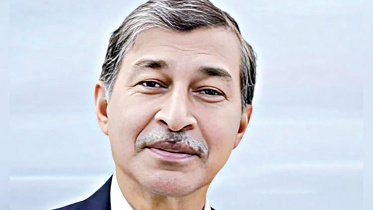


Former army chief General (retd) Iqbal Karim Bhuiya testified at International Crimes Tribunal-1 that he refrained from taking written action against Major General (relieved) Ziaul Ahsan, despite being aware of his alleged involvement as a “serial killer” based on information from various sources. Iqbal explained that he lacked direct authority over Ziaul at the time, which hindered him from issuing formal directives. Instead, he claimed to have verbally instructed the Director of Military Intelligence (DMI) Jaglul and the army security unit’s commanding officer Brig Gen Fazal to counsel Ziaul against any wrongful actions.
In response to questions from defence counsel Aminul Ghani Titto, Iqbal stated that he did not issue any written directives due to Ziaul being beyond his control. He maintained that he verbally directed the two officers to advise Ziaul, emphasizing that his assessment of Ziaul as a “serial killer” was based on personal judgment and intelligence from undisclosed sources that were not documented.
Regarding promotion board meetings, Iqbal suggested that the Directorate General of Forces Intelligence (DGFI) might not have provided adverse reports on Ziaul due to alleged collaboration between DGFI and Rab in questionable activities. Ziaul faces charges in a crime against humanity case related to the disappearance and killing of 104 individuals.
During his tenure as army chief from 2012 to 2015, Iqbal confirmed that he did not issue any directives to investigate Ziaul. While he claimed to have attempted to reintegrate Ziaul into the army, he cited the routine destruction of official records after a certain period as the reason for the lack of documentary evidence. Notably, Iqbal admitted to neither issuing written orders nor personally summoning Ziaul, mentioning that Ziaul visited him a couple of times without formal invitations.
In response to queries on Ziaul’s alleged misconduct, Iqbal expressed uncertainty about the existence of intelligence or service records labeling Ziaul as a serial killer or maintained by army offices. He acknowledged being appointed as army chief ahead of his seniors, citing factors beyond seniority such as performance at staff college and professional qualifications. Additionally, Iqbal alleged that DMI Jaglul was involuntarily transferred due to Ziaul’s influence, but could not recall the specific date of Jaglul’s posting.
The cross-examination is set to resume on March 1 as the tribunal continues to delve into the details of the case.