
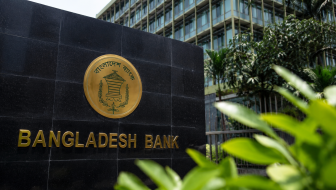


Deposits in basic banking accounts saw a significant rise of 23.93% year-on-year, reaching Tk 9,010 crore by the end of the April-June quarter of 2026, as per data from Bangladesh Bank. The total count of these accounts stood at 3.66 crore during the June quarter, marking a 9.98% increase from the previous year.
Basic banking accounts, known as no-frill accounts (NFAs), are designed for low-income individuals, students under 25 years old, street children, and working children, with initial deposit options of Tk 10, Tk 50, or Tk 100. Excluding specialized accounts for students, street children, and working children, there were 2.95 crore Tk 10/50/100 accounts with deposits totaling Tk 5,490.92 crore.
The majority of these accounts, 36.78%, were linked to social safety net programs, followed by farmer accounts at 36.33%. NFAs also serve as a conduit for inward remittances, with cumulative remittances through these accounts reaching Tk 835.43 crore by June.
In the same quarter, 7.87 lakh new student banking accounts were opened following the latest Bangladesh Bank guidelines. Additionally, 18 banks, with support from 49 non-governmental organizations, managed 40,607 accounts for street children and working children.
To enhance financial inclusion, Bangladesh Bank has mandated banks to offer no-frill accounts with minimal initial deposits of Tk 10, Tk 50, or Tk 100. These accounts do not require a minimum balance or incur service charges and offer comparatively higher interest rates to support low-income individuals.
Beyond targeting farmers, garment workers, and the extremely poor, these accounts cater to various marginalized groups, including beneficiaries of social safety net programs. Student banking accounts, allowing young individuals up to 25 years old to open accounts with Tk 100, are also part of this initiative.
As of June 2026, the government distributed subsidies or salaries to 7,189,291 NFAs held by diverse marginalized groups, showcasing the impact of these inclusive financial measures.