


In the past, Bollywood star Aamir Khan shared insights on the pay gap between male and female actors in response to a question. He emphasized that an actor’s fee is not solely based on gender or talent but on their ability to draw audiences to theaters. If a female actor can attract more viewers than a male actor, she should rightfully command a higher fee.
This argument underscores the importance of talent, hard work, and the economic value an actor brings in the entertainment industry. The same principle can be applied to sports, particularly women’s sports in Bangladesh.
Recent developments in Bangladesh’s sports scene include a significant increase in match fees by the Bangladesh Cricket Board. Men’s first-class players will now receive Tk 1.5 lakh per match, with fees for List A and T20 matches also seeing a rise. Women’s match fees have doubled as well, with first-class matches offering Tk 40,000, List A matches at Tk 30,000, and T20 matches at Tk 20,000. This increase acknowledges the need to support professional athletes beyond their passion and dedication.
While the pay raise is a positive step, it prompts a deeper question: are women athletes compensated based on their actual market value or on the underdeveloped market for women’s sports in Bangladesh?
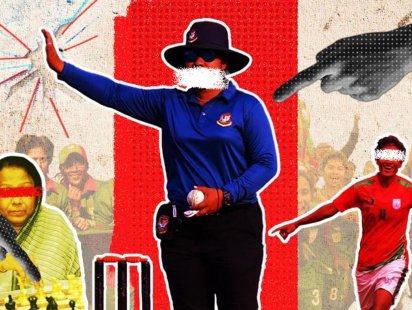
Building a fan base and commercial viability for a sport requires consistent exposure, media coverage, sponsorship, and engagement through platforms like social media. Women athletes in Bangladesh have shown promise in sparking interest, particularly in football, futsal, and hockey.
Notably, Bangladesh’s women’s sports teams have achieved significant success at both national and international levels, challenging the notion of a lack of interest in women’s sports. Grassroots initiatives and social media have played a crucial role in showcasing the talents of female athletes and attracting audiences.
To ensure sustainable growth in women’s sports, it is essential to create a conducive ecosystem that includes regular competitions, broadcasting, promotion, and sponsorship opportunities. The focus should be on nurturing talent, building rivalries, and fostering fan bases to enhance the commercial value of women’s sports.
The emphasis should not be on immediate pay equality but on creating equal opportunities for women athletes to thrive and generate their market value. Initiatives like “Notun Kuri Sports” that aim to identify and develop young talent are steps in the right direction, showing that potential exists beyond traditional sporting hubs.
The discussion should revolve around providing equal opportunities for women athletes to excel and create value in the sports industry. Before expecting them to earn their market value, it is crucial to establish a market that supports and recognizes their contributions.
By Shafiq R Bhuiyan, Vice President and Head of Internal Communication and CSR at BRAC Bank.