
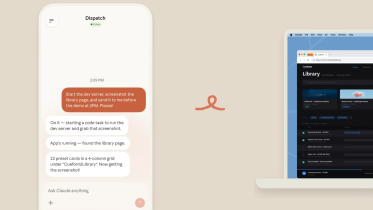


Anthropic has unveiled a novel functionality enabling its AI assistant, Claude, to directly manage a user’s computer by performing tasks like pointing, clicking, and navigating screens seamlessly, eliminating the need for additional integrations. This cutting-edge capability is in a research preview phase for subscribers of Claude Pro and Max, accessible through the Claude Cowork and Claude Code platforms. In cases where no specific tool integration is available for a task, Claude can leverage the browser, mouse, keyboard, and screen to execute actions such as opening files, scrolling, clicking, and exploring. Prior to accessing new applications, the system diligently seeks explicit user consent.
This new feature is intended to complement Dispatch, a recently launched tool that empowers users to assign tasks to Claude from a mobile device and receive the completed work on a desktop. Users can delegate routine tasks, including email checks, test runs, or report generation, to Claude while they are away from their computers. Anthropic emphasized the implementation of safeguards to mitigate risks, including prompt injection and automated scanning for suspicious activities. Users retain the ability to halt Claude’s actions at any point. The company emphasized that computer utilization is still in its nascent stage, advising users to commence with trusted applications and refrain from working with sensitive data, as certain apps are restricted by default.
Presently, computer utilization is solely supported on macOS, necessitating users to activate the feature in the desktop app settings and maintain the application running. Anthropic disclosed that the feature was released early to gather insights on its constraints, highlighting that intricate tasks might require multiple attempts and that operation through a screen is comparatively slower than direct integrations.