
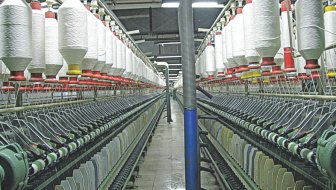


Bangladesh and India recently deliberated on the possibility of removing Dhaka’s restrictions on Indian yarn imports via land ports. This discussion was part of broader talks aimed at enhancing bilateral trade relations, which also included strategies for reopening closed border haats and ensuring the full operation of land ports.
During a meeting at the Secretariat in Dhaka, Commerce Minister Khandakar Abdul Muktadir and Indian High Commissioner to Bangladesh Dinesh Trivedi examined the current state of bilateral trade, which currently amounts to approximately $13 billion. Both parties acknowledged a slowdown in trade activities over the last year and a half due to various challenges.
The focus of the meeting was on addressing these hurdles and streamlining trade processes between the two nations for increased efficiency. India ranks as Bangladesh’s second-largest trading partner, following China, and has a longstanding economic relationship with the country.
Key agenda items included plans to optimize land port operations, revive closed border haats, and eliminate existing constraints on yarn imports via land ports. Additionally, discussions centered on establishing a joint task force and enhancing digital infrastructure to foster greater collaboration among businesses, create fresh investment prospects, and expedite trade activities.
Minister Muktadir expressed optimism that the initiatives proposed by the Indian High Commissioner would fortify Bangladesh-India ties and elevate economic cooperation to new heights. Trivedi emphasized the importance of economic collaboration in bolstering bilateral relations, highlighting its potential to catalyze broader cooperation across various sectors.
He underscored the significance of joint investments and production, citing the global success of Bangladesh’s ready-made garment industry. Trivedi proposed that India could support this sector by providing essential materials like zippers, machinery, and buttons, fostering mutual reliance between the two nations.
The high commissioner also lauded the presence of “Made in Bangladesh” garments in international markets, suggesting further expansion possibilities through collaborative efforts between the two countries.