
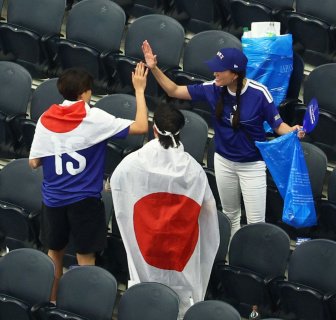


Fans of Japan’s national soccer team showcased their renowned humility and discipline following their team’s exciting 2-2 draw against the Netherlands in Arlington, Texas. The match took place at AT&T Stadium in front of a packed audience, with Japan coming from behind twice against the higher-ranked Dutch team.
After the game, instead of just celebrating, supporters engaged in a unique tradition by picking up litter throughout the stands. This act, synonymous with Japanese soccer culture, involved fans meticulously cleaning up their seating areas well after the final whistle, presenting a stark contrast to the typical post-match chaos seen in many tournaments.
On the field, Japan displayed resilience, with midfielder Daichi Kamada scoring a vital equalizer by reacting quickly to a deflected header from Koki Ogawa. This ensured that Japan secured a valuable point, leading to a shared outcome for the top two teams in Group F. Despite the draw, Japan’s comeback from being behind twice gave the result a triumphant feeling.
This behavior by Japanese supporters is not new, as they gained international acclaim during the 2018 World Cup in Russia for cleaning up stadium sections even after losses. This tradition continued in Qatar four years later, with fans tidying up venues following Japan’s wins against football powerhouses Germany and Spain in the group stage, allowing them to top Group E.
Former Japan coach Hajime Moriyasu emphasized that this cultural practice is ingrained in Japanese society, reflecting a deep-seated norm of leaving public spaces cleaner than they were found, rather than being a show for the cameras.
Adding an unexpected element to the scene was NFL quarterback Jameis Winston, who was present in a media capacity for FOX. Winston interacted with fans from both teams, engaging in pre-match chants outside the stadium and observing the Japanese supporters’ cleanup efforts.
While the soccer action on the field provided excitement and intensity, it was the behavior in the stands that once again highlighted Japan’s football identity on the global stage – characterized by discipline, respect, and a shared sense of responsibility that transcends mere scorelines.