
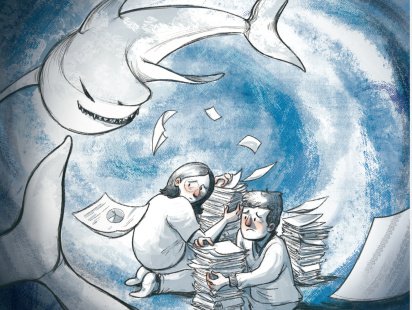


A recent report by Prothom Alo has brought attention to the discovery of 325 retracted academic papers linked to researchers from Bangladeshi universities. This revelation has sparked public concern over the state of academic integrity in Bangladesh. Comments expressing shock and disappointment highlight the widespread nature of the issue. One observer described the situation as “shameful and corrosive,” while another suggested it reflects a broader moral crisis beyond academia. A senior university official attributed the retractions to international journal standards, pointing out that plagiarism detection tools like Turnitin are typically used during paper submissions, making the retractions puzzling.
Historically, retractions were uncommon, but over the past two decades, retractions have surged globally across various fields. Studies have identified reasons for retractions ranging from errors in data and analysis to ethical violations like plagiarism and fraud. Some researchers have raised concerns about the peer-review process and editorial oversight, indicating a potential increase in research misconduct on a global scale. This indicates that the recent retractions in Bangladesh are not isolated incidents.
The retracted papers from Bangladeshi institutions mirror international cases, involving issues such as plagiarism, manipulation of peer reviews, unreliable data, and suspected involvement in paper mills. Paper mills are deceptive entities that profit by producing fake research papers and selling authorship to academic clients. The situation underscores broader challenges in academia, including escalating publication pressures, evolving forms of misconduct, the impact of artificial intelligence (AI), and problematic research practices such as commercialized output.
Retractions are often viewed as individual lapses in judgment, but they also highlight broader institutional issues. The focus should not solely be on the severity of retractions in Bangladesh but also on the systemic factors that contribute to such problems. Structural pressures, prioritization of quantity over quality, inadequate governance mechanisms, and limited research capacity can all contribute to integrity failures. These challenges are indicative of underlying constraints within the national research ecosystem.
Factors such as heavy teaching loads, limited research funding, talent shortages, brain drain, and weak governance systems pose significant obstacles to research integrity in Bangladesh. The lack of policies on research misconduct, inadequate ethics oversight, and a dearth of ethics training further exacerbate the situation. Strengthening institutional governance, enhancing ethics education, and establishing mechanisms for monitoring research integrity are crucial steps to address these challenges.
The recent retractions serve as a call to action for institutions in Bangladesh. They underscore the need for substantial investment in research infrastructure, governance, and integrity to ensure the credibility and rigor of scientific endeavors. While retractions may point out flaws in the scientific process, they also emphasize the necessity of robust support systems to foster a culture of trustworthy and rigorous research.
Dr. Syed Saad Andaleeb, a distinguished professor emeritus at Pennsylvania State University and former vice-chancellor at Brac University, shared these insights.
It is important to note that the views expressed in this article are solely those of the author.