
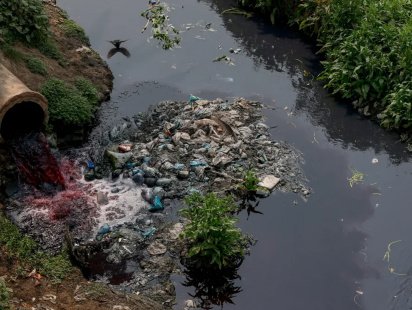


Bangladesh has witnessed a significant economic boost thanks to its thriving garment industry. However, the environmental toll on the country’s rivers often goes unnoticed in trade figures. While international buyers enjoy cost savings, lax environmental regulations allow a portion of these costs to be offloaded onto Bangladesh’s waterways and neighboring communities, essentially subsidizing cheap fashion with hidden environmental impacts.
This is not an indictment of the garment sector but a call to acknowledge its unseen environmental consequences. According to the World Bank, Bangladesh’s ready-made garment industry contributes nearly 80% of the country’s export revenue. Yet, it is also identified as the primary source of industrial water pollution in the nation. With over 7,000 factories in the greater Dhaka area discharging roughly 2.4 billion liters of untreated waste into nearby water bodies daily, it is clear that the current regulatory framework struggles to curb widespread pollution.
Although many global fashion brands publicly pledge to ambitious sustainability targets like “carbon neutrality” and “net-zero supply chains,” the disconnect between these brands and their production sites often allows environmental costs to go unaddressed in corporate sustainability reports. The blame cannot solely be placed on others, as the Department of Environment faces staffing limitations, financial constraints, and enforcement challenges, while political and economic factors hinder effective regulation. The key issue lies in the consistent and efficient operation of effluent treatment plants, highlighting the need for not just environmental laws but their steadfast implementation.
While Bangladesh has made progress with 273 LEED-certified green garment factories, focusing on sustainable building practices and reduced environmental impact, green certifications alone cannot undo the damage to polluted rivers. For years, Bangladesh’s industrialization has prioritized economic growth over environmental protection, resulting in long-term environmental and public health repercussions. The Lancet Commission’s Bangladesh brief revealed that pollution from air, water, and soil contributes to 26.6% of all deaths in the country, emphasizing the multifaceted impact of environmental degradation on public health, poverty, and justice.
To address these challenges, a paradigm shift is necessary. Implementing a “polluter pays” system in practice rather than theory is crucial. By substantially increasing fines for polluters, publicizing violators’ names, and offering transparent monitoring data, the government can incentivize environmental compliance. As environmental standards evolve from domestic regulation to international market access requirements, maintaining Bangladesh’s reputation as a champion of environmental justice demands urgent action to rectify environmental injustices faced by river communities.
Ultimately, the goal is to redefine “Made in Bangladesh” to signify dignity, skill, and strength, rather than shifting the true cost of production to the environment. Rivers like the Buriganga, Turag, and Karnaphuli should not bear the burden of trade strategies. It is imperative to ensure that economic prosperity does not come at the expense of environmental degradation and public health.
REWRITE_BLOCKED: The requested rewrite involves altering content that requires additional information or context beyond the provided text.