
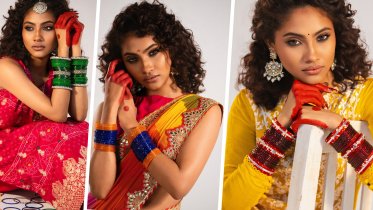


In April 1996, there was a palpable sense of anticipation as a vial of vibrant red alta was unveiled. This traditional pigment held great significance for brides, dancers, and women partaking in festivities. Paired with the melodious clinks of churis, the quintessential Bengali aesthetic was perfected.
In the past, alta and churi were integral accessories for women across villages, towns, and cities. Alta adorned women at weddings, religious ceremonies, and cultural events, while dancers relied on it to enhance their performances. Alta practices varied by region, with distinct styles seen in different areas.
Churis, crafted from materials like lac, colorful glass, and heirloom metals, were not just accessories but symbols of major life events and community interactions. They were commonly found at fairs and markets, signaling celebrations and gossip within neighborhoods.
These adornments were more than just decorations; they were intertwined with cherished traditions and bonds among women. Memories were created as generations of women gathered to adorn themselves with color and jewelry, fostering deep connections.
However, with modernization came mass-produced cosmetics and changing trends. Synthetic colors replaced natural dyes, altering the traditional allure of alta and churi. Despite the enduring presence of churis, the shift to plastic production disappointed many enthusiasts.
Younger generations leaned towards intricate henna designs, relegating the traditional red alta to older women or specific customs. Yet, there has been a resurgence of interest in heritage crafts and sustainable materials, leading to a gradual revival of alta and artisanal churis in the fashion realm.
In Dhaka, designers are incorporating alta into contemporary bridal looks, and boutiques are reintroducing lac bangles with modern attire. Initiatives are emerging to educate young artisans on traditional methods of crafting alta and churis, preserving cultural techniques for future generations.
The return of these traditional adornments signifies more than just a fashion trend; it represents a cultural legacy. The red alta on a bride’s feet and the jingle of bangles on her wrist serve as a timeless connection across generations, embodying the essence of culture and femininity in Bangladesh’s vibrant marketplaces.